Ancient Calendars Compared

The Akkadian Calendar

The people of Agade, the first Semitic people on earth brought about many changes. A number of their advancements are still with us today.

The one that the Hebrews/Jews (Semites of today) still use today, is the Akkadian calendar. The Akkadians used a lunar calendar, and the names of each of the 12 months are exactly or nearly exactly the same as used today by the Jewish calendar. As Akkadian is the root language of Hebrew.

As an example;

Hebrew  language                                 Akkad language

First lunar month,                                 Nissan                                                   Nissannu

2nd                                                        Iyar                                                     Ajaru

3rd                                                        Sivan                                                   Sivanu

4th                                                        Tammuz                                              Tamuzu

5th                                                        Av                                                       Abu

           An interesting point pertaining to the Jewish calendar is that year “one” in their calendar is the year 3760 BC, or to give an example the year 1996 is the year 5756 in the Jewish calendar. The significance of the year 3760 BC to the Jews is that they believe this is their  1st year of their creation. The first year of their kingdom on earth. Some Jews will contend that this is the first year of the creation of earth, but no one really believes that human or Earth’s history began at 3760 BC.

            What makes this year important, is this year also coincides to the same year that Naram-Sin proclaimed himself God and Master of the Universe, as the King of the Akkadian Semite people. This year of Naram-Sin can be verified by the cuneiform texts, now existing in the British Museum, of Nabonidus. The tablet states that a period of 3200 years elapsed between Nabonidus finding Naram-Sin’s memorial temple foundation stone at Sippur, and the burial of that stone.

Further reading: Blog; The Akkadians

 The following text is from the cylinder of Nabonidus; I removed the debris of that temple, looked for its old foundation deposit, dug to a depth of eighteen cubits into the ground and then Šamaš, the great lord, revealed to me the original foundations of Ebabbar, the temple which is his favorite dwelling, by disclosing the foundation deposit of Naram-Sin, son of Sargon, which no king among my predecessors had found in three thousand and two hundred years.

           This would mean in 3760 B.C. at the height of Naram-Sin’s reign, he decided to rebuild this important temple. This event then coincides with the beginning of the Jewish Semitic lunar calendar as year one. An interesting fact connecting modern Semitic people and those that lived and died centuries before.

          Nabonidus began his reign what many suggest in the year 556 BC, and shortly afterward began his reclamation of ancient temples. By simply adding 555 years to 3200 years, the year 3755 BC is noted, which is very close to 3760 BC, and right in the middle of Naram-Sin’s military conquests.

          The Deification Ceremony of Naram-Sin could of have been combined as part of the completion of a temple, or the beginning of the temples construction.  This is a very significant event/date that he would have choosen to celebrate as year one on the Akkadian Calendar, which all Semitic peoples down to this day recognize.

           Many experts have disagreed with Nabonidus dating of Naram-Sin’s account, stating that his records have to out by some 1500 years to correspond to their own dating of these accounts, The question is how could Nabonidus calculations be out by 1500 years, ( a very large number), when he was party to the study of Babylon’s History? A study that he took very seriously using Babylon’s ancient libraries, and as the text suggests, many of his predecessors did likewise. These libraries of ancient cuneiform writings that are not available for today’s scholars to examine.

 L.King’s bell weather book; History of Summer and Akkad, published 100 years ago, discusses these very points.

           The year that Naram-Sin, the first King to be defied, and his Semitic people proclaimed their King, was now named the Master of the Universe, is the same year that the Jewish Calendar appoints as year one. This is a clear indication of discovering the true Jewish history and their first god Dagan.

For further reading;

http://trueancienthistory.blogspot.ca/2013/05/age-of-aquarius-mankind-awakens_12.html

Age of Aquarius

                                 Age of Aquarius

The very first technology that man saw necessary to begin his existence was the invention of the calendar.. Even before man saw the need of a written language, a written code of laws, or the knowledge of husbandry, and agriculture, man first needed a calendar. A calendar would relate man to the beginning of the new year. This point in time resulted in the preparation of soils for the seeding of crops, and the movement of flocks to pasture, and the breeding of these flocks This was all dependent on determining the first day of the new year.

From Akkadian calendars on, calendars were lunar, but the beginning of each new year was a solar event.The spring equinox. The Akkadian and later lunar calendars chose the new moon closest to the spring equinox as the first day of the new year.  The reason that Easter and Passover (Nissan 14th) occurs on different dates each year, is that the new moon appears at a different solar date, on our present day calendars, because our present day calendars are solar and not lunar.

The Sumerians apparently dated their calendar somewhat different to later lunar calendars. They chose an event to date the beginning of their lunar calendar that would have a profound effect. It would give us the ability to determine the dating of these calendars. The beginning of the first day of their new year, was the combination of the spring equinox and the setting of a constellation (Zodiac). The Sumerians used the cross of equal lengths, when indicating the spring equinox in a relief. They often drew this cross in conjunction with it’s appropriate Zodiac symbol.

                                Photo

In figure 1. we see the sign of the spring equinox, and Sumerian farmers preparing their fields for seeding, using a plow.In figure 2. we see the Zodiac sign of Taurus, the Bull, and the sign of the spring equinox, along with the summer solstice sign of the Lion.

For those of us that saw the musical “Hair” you might remember the song “Age of Aquarius”. This age will actually begin in the year 2100 AD. The reason for this is that the earth’s rotation is not perfect, but it wobbles on it’s north/south axis. For a wobble to complete one revolution it takes 25,920 years; therefore each age of a Zodiac constellation takes 2160 years. It then becomes possible to backdate man’s earliest calendars if we know the Zodiac that was visible during the spring equinox. The first Zodiac that was acknowledged by the Sumerians was the Lion  This is seen on a early Sumerian tablet, which can be seen today in the Berlin Museum. The Lion sign occurred between 8700 BC and 10,860 BC. This would have been when mankind first became aware of himself and his social surroundings. Man would have been building villages and practicing farming, in large social groups.

The Sumerians left many clay tablets dealing with a certain period in their civilization. That Zodiac period was the Age of Taurus, which period ran from 4380 BC. to 2220 BC. This period in Man’s development might be call the Renascence of ancient man  This was the period that the Sumerians developed their written language, law codes and legal system, intensive irrigated farming practices, and extensive building program of temples, including the building of their Ziggurats. It was their Alpha and Omega period. Their Zenith and their conclusion, for soon after their social peak they were destroyed by the Akkadians.

It wasn’t just the Sumerians who had this period of intellectual growth, but Egypt and many surrounding civilizations throughout this period exhibited these giant steps of development.

For further reading on ancient Calendars;

http://trueancienthistory.blogspot.ca/2013/05/ancient-lunar-calendars-compared-to.html

The Sumerian Planet of Nibiru

Nibiru

The Sumerian text speaks of a “star” they refer to as Nibiru, the star of Marduk. The actual meaning of Nibiru translates, “place of crossing”, and as many Sumerian words have more than one meaning, Nibiru can also mean a crossing place, as in a road juncture. When Nibiru is used as “star” it is superscribed with a “Mul”. Mul in Sumerian means a heavenly body, such as a star, planet or constellation.  Planets in Sumeria also had a connection to a God, so Nibiru was also superscribed with a “d” which refers to the Sumerian word dingir, or god. Even today the planets are named after ancient gods, a practice that came from the Sumerians.The location of Nibiru and colour of the star, is also stated in Sumerian text.

“red star which stands in the south after the Gods of the night have been finished, dividing the sky in half, this star is Nibiru “.

“let Nibiru be the holder of the crossing place of the heaven and of the earth”.

From these texts it seems apparent that if your near the equator, as the region of Sumer was, and you look directly south, in the early morning sky, (after the Gods of the night have finished), then a red star is seen, as if it stands at the cross roads, dividing the southern sky. Hence the name given to the star Nibiru refers to its position in the southern sky, as midway when looking south.

Many experts of of Sumerian text, have miss interpreted, the following two texts, in believing that Nibiru is either the planet, Mercury or Jupiter. That was not the original purpose of the text.

“If Mercury divides the sky and stands there, (It’s name) is Nibiru”.

Notice the word “if” precedes Mercury, to show distinction between the two “stars”. What the writer was trying to convey, was that early Sumerians were often confused between these two stars, Mercury and Nibiru, (possibly because they were seen in close proximity to each other or their similar colour) so the text was telling the observer, was that if the star looks like Mercury, but stands fixed in the middle of the southern sky, it’s not Mercury, but it’s Nibiru.

“When the stars of Enlil, have finished, one big star, although it’s light is dim, divides the sky in half and stands there, that is the star of Marduk, Nibiru;  Jupiter it keeps changing it’s position and crosses the sky.”

Again the writer of these texts is trying to distinguish these two “stars”. Nibiru continues to perplex the Sumerians, in that it looks like a planet, but unlike planets, it is fixed in the southern sky (stands there). The text is comparing it’s movement to Jupiter, which crosses the sky. These texts are not as many suggest, referring to Nibiru as being Mercury or Jupiter, but are simply comparing Nibiru to these two planets.

It can be said that Nibiru does not exist in our present day southern sky , so what was Nibiru? There is only four things in our solar system that move across the sky, and they are, planets, moons, comets and asteroids, but Nibiru is fixed in the sky. So by simple elimination, Nibiru cannot be any of these four. So what were the ancient Sumerians seeing in their southern sky?

There is no Sumerian text linking Nibiru and the Anunnaki. There is no text suggesting that Nibiru is the “home planet” of the Anunnaki. There is one piece of coincidence, and that both the Anunnaki and the star Nibiru both vanished from existence soon after the flood occurrence.

My three theories; and they may seem remote to some:


1)That Nibiru was a planet. For some reason this planet exploded and is now seen as the asteroid belt. The Anunnaki were therefore destroyed along with it. It seems to be the simple answer and explains everything.

A German astronomer, Heinrich Olbers, in 1807, in his effort to find the 7th planet, using Bode’s Law, found 2 asteroids instead. He would later remark;

“Could it be that Ceres and Pallas are just a pair of fragments…of a once greater planet which at one time occupied its proper place between Mars and Jupiter?”

The asteroid belt falls in the region, as predicted by Bode’s Law, that should support a planet. Is this the 7th planet, that once existed, the ancients saw, and described in their skies? Those that continue to disregard this, often point to the fact that the asteroid belt’s total mass is too small to account for a planet. That’s a valid point, but one must consider that most of the planet’s material would have been consumed by the Sun, and a large amount collided with the planets and moons of the solar system. Also a large number of Trojan asteroids follow each planets orbits. The Earth, Jupiter, and Uranus all have pilot or Trojan asteroids.


The point of intrigue  is that the Sumerians knew of 5 planets, from Mercury to Saturn. Not counting Earth, but they always visualize 7 planets in their art.  The point is if Nibiru was a planet, and with the Earth included, that would give them their 7 known planets up to including Saturn.

Below the ancient Stela of Adad-Nirari found in Iraq in 1967, showing at the upper left, the seven orbs representing the seven known planets, and though to also represent Enlil, the symbol of the crescent  moon representing Sin and the 8 pointed star of Venus venerating the Goddess Ishtar. The upper right is the winged chariot of the Gods, and a number of symbols representing various Gods. All these symbols are reproduced over and over again in these ancient reliefs and steles.

Image result for Stela of Adad-Nirari

The stela of Sennacherib below shows the King standing before the symbols of the Great Gods including the winged Chariot of the Gods and the 7 planets.


This is the upper par of the limestone stela of Sennacherib, king of Assyrian. The king is praying in front god symbols. From Kuyunjik (modern-day Ninawa Governorate, Iraq). 705-681 BCE.

 2nd)                                   The Star of Civilization

An Ancient star existed in the Southern sky, that was thought to begin the advancement of mankind’s knowledge. From the study of this star early mankind developed mathematics and science.

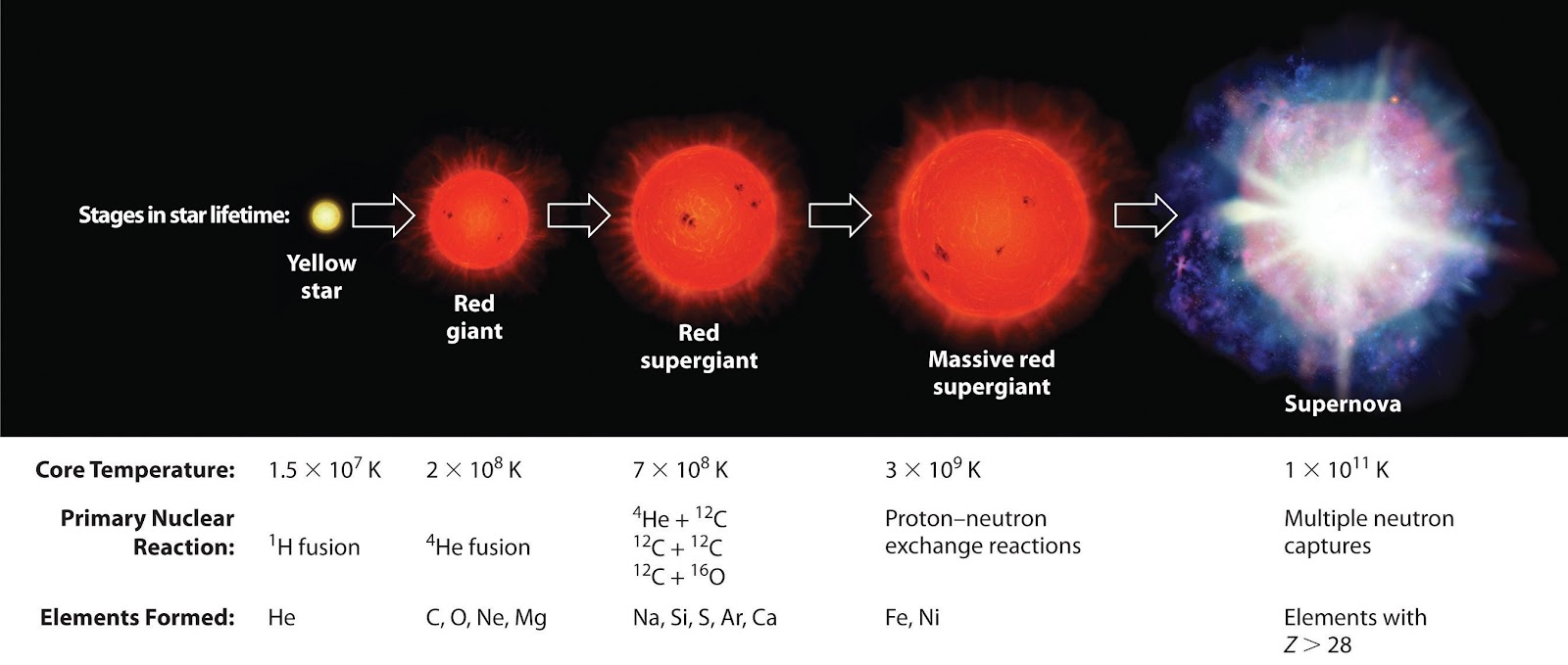
A star is basically a fusion reactor, taking two hydrogen atoms with the help of tremendous heat and pressure, producing a Helium atom. As the giant furnace runs out of hydrogen atoms a super giant red star is produced. A super giant red star is very bright and very large. Over 1 million times brighter than a sun and over 1000 times larger. This giant state lasts for a considerable time until this giant red star goes supernova. It explodes and disappears.This results in expanding gas that often forms into recognizable nebulas.

The Vela Supernova exploded some 11,000 to 12,000 years ago, and all that’s left is some expanding gas that can be seen today is the Pencil Nebula as seen below.

The Pencil Nebula (NGC 2736) looks very similar to a witch's broom

What is of interest in this Supernova is that it exists low in the southern sky over the Persian Gulf, mid way across the southern heavens. Prior to going supernova this red giant star would have been very visible from ancient Sumeria. Brighter and larger than Venus. Vela Supernova is very close to earth, being only 800 light years away.

The existence of this giant red star is collaborated by the Sumerians calendar which began in 10,800 BC and the Sumerian wrote extensively of this red “star” that was fixed at  the cross roads of the southern sky. Not a planet, but a red star that now no longer exists..All this points to the fact that Nibiru was that giant red star of Vela before going Supernova, that the Sumerians wrote about.

Nibiru was not a Sumerian myth or children’s story, but it existed and was studied by the Ancients.

 3rd)That Nibiru was seen by the ancients, but cannot be seen today, may indicate that it still exists. but we are unable to be seen, for whatever reason. Is it possible that Nibiru has slipped back in time so that we are no longer able to see this planet? It’s like arriving at a location, where your meeting your friend, but he’s 10 minutes late, and he’s always 10 minutes late, so in effect you will never see him. The Omega symbol may be that link. A link connecting another time line. The ancient Anunnaki in their reliefs were pointing upward, as if they now saw something, as if something can now be seen, that was otherwise hidden. (as in the reliefs below)   Were they in effect looking back in time, while being in the present? Was this the two worlds, or two different states of being that they were trying to depict, between the tree of life?

In the two reliefs above, taken from the Assyrian palace walls at Calah, we can see two Anunnaki on either side of the Tree of Life, again they’re pointing to the throne/chariot above, as if saying, “ Look, we can see it.” This and similar reliefs reoccur time and time again. The ancient people  were simply engraving what the saw, and for the most part, not having any understanding what they were drawing.

In above relief, we see the Anunnaki on either side of the tree of eternal life, pointing up, as if drawing our attention to the throne/chariot. As if saying; “Can you see it or can you see me”. What originally appeared as landing feet of the throne/chariot of the gods, are now pulled down, as if they’re an extended cable with the Omega symbol at each end. These are not landing feet, but are means of which the Anunnaki are able to see, and transfer from the underworld to our world. The figure on the left in the underworld, to the figure on the right in our world, through the tree of eternal life. In Sumeria and in many other ancient societies, the Tree of life, is a phallic symbol, representing the erect penis, and from it eternal life grows. Tree in the Sumerian language is the same word as penis. The Sumerian language also used the same word for water, as the word for semen. Water or irrigated water, was the source of all life, the seed of life, and it represents eternal life.

The gods of Armageddon.  Sometimes they come back ...

In the Assyrian relief above, again we see two Gods knelling between the tree of life, in honour of the Chariot of the Gods. Again the lines linking the chariot sun disc with the Omega at each end.

 Was the Abzu the means to exit and enter between these two worlds? Would not moving back to a different time line extend your life, hence the perception that the Anunnaki lived much longer than mankind on earth. That Nibiru could still exist today, but only through special set of circumstances are we allowed to see the Universe as it really is. Is this the same for the earth’s hidden and dark secret place where no man may find? Are we unable to find this secret place simply because we lack a technology? A technology to see what is hidden. Time will always answer.

For further reading;

http://trueancienthistory.blogspot.ca/2012/11/kronos.html

Kronos the Beginning
Kronos the Beginning

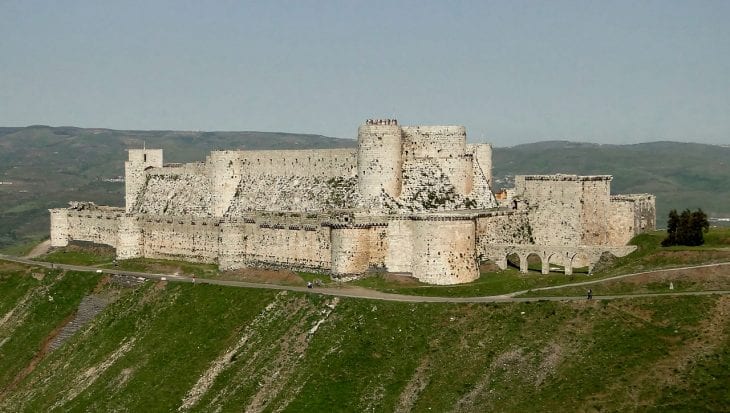
Image result for crusader castles

Man’s first thought, after looking up at the heavens, was what am I and what am I looking at? These 2 questions have prevailed in man’s thinking and have motivated man in his quest for knowledge. The first question to analyse is our solar system, it’s mechanics and it’s purpose.

The early Sumerians knew of seven planets, which they drew in their reliefs. These were from Mercury to Saturn, but today we observe only six. How is it then that the Sumerians were able to see a seventh planet which they named Nibiru? They were able to describe it in infinite detail; it’s colour, it’s location in the night sky, and even when the planet could be best viewed. For what reason would an ancient people lie about giving so much detail about the existence of a seventh planet?

The location of planets throughout the solar system follows a law of physics. This law is called Bode’s Law. This law simply states by mathematical formula the location of where planets should exist, in their orbits around the sun. This law gives rise to the fact that the existing asteroid belt, which orbits the sun between Mars and Jupiter, was once a planet. This planet existed prior to the asteroids and was visible by the early Sumerians. The Sumerian earliest known calendar dates back to 10,860 B.C. as indicated by their earliest Zodiac sign, so that would mean that ancient man, observed this seventh planet, since 10,860 B.C. (Age of Aquarius blog) This planet for reasons unclear, exploded into the asteroid belt.

By simple observation the solar system has several note worthy distinctions

1st The inner four planets, (Mercury to Mars) are distinctly different than the outer four planets (Jupiter to Neptune). These two grouping of 4 planets are separated by the asteroid belt.

2nd The inner four planets have thin atmospheres, if any at all, while the outer four have a very thick, heavy and almost liquid atmosphere that travel at a very high speed of rotation.

3rd The inner planets have very high specific gravity numbers, while the outer four have very low s.g. numbers, closer to 1. In fact Saturn’s specific gravity is less than 1, which would mean Saturn could actually float on water. The average specific gravity of the outer four planet, (including the Sun) is about 1.3.

109


This lends itself to an interesting conclusion. Were all the planets at one time similar to the outer four, with thick liquid atmospheres, and with low specific gravity numbers? All planets have a solid core, beneath the atmosphere and at one time had a molten iron inner core that produces the planet’s magnetic field. This can only produce a very high s.g. numbers.To arrive at much lower s.g. numbers a very thin, light atmosphere must make up the majority of these outer planets atmospheres. The observable heavy thick atmosphere must then makeup only the very outer limits of these 4 planets atmospheres. Without this thin inner atmosphere the s.g. numbers just cannot be attained.

This 2 step atmosphere that in the past existed throughout the solar system including the inner 4 planets would give rise to a very different climate condition and geography on Earth and Mars, than we see today. This outer thick atmosphere would create a green house effect on the earth.

Since the outer atmospheres are orbiting about these planets at high velocities, they would not contribute to high atmospheric pressure on the planets surface. Instead they would orbit the planet as a satellite would.

We know that at one time in our history, earth had a tropical climate over all of it’s geography. This allowed for large plant life that would support numerous large reptiles to roam the planet. Mars history also supported large amounts of water,as recently discovered, which could have also supported possibly animal and plant life. The 2 step atmosphere all gave rise to this occurring.

This all changed in an instance, resulting from a catastrophic reaction. Mars lost all of it’s atmosphere, and eventually through time and the coldness of space solidified it’s molten core. With the freezing of it’s molten core Mars lost it’s magnetic field. Earth had a similar fate though less dramatic.

What would cause this result. Only one event occurred that could bring these horrific conditions.The exploding of this seventh planet, now observed as the asteroid belt. The reason for this explosion will never be known, but the event did occur.

Kepler’s third law clearly indicates that there is a planets missing between Mars and Jupiter, which is shown using a graph of values of “a” or astronomical units.
Argyre Basin

Argyre Basin

The southern hemisphere of Mars pictured above shows the results of the asteroid collisions resulting from the exploding of the 7th planet. Mars like earth is tilted on it’s axis to give the planet seasonal changes. In the case of Mars this tilt is 25 degrees. By comparing the Northern Hemisphere with the Southern Hemisphere a noticeable difference is evident. The northern 1/2 of the planet has remarkable few asteroid craters, which indicates that the southern 1/2 of the planet was tilted towards this massive event of the exploding 7th planet and received the majority of the damage.

At first the broken planet’s material, now known as asteroids, took a linear path from the point of the explosion, but this over time turned elliptical. Much of the lighter material, or heavy gravel like material, along with now frozen atmosphere gases, was quickly absorbed by the nearest 2 gas giants, Jupiter and Saturn gravitational forces. This material can today be seen as rings around these 2 planets. Much of the heavier asteroids would be consumed by the sun, but they also would cause numerous collisions through out the solar system, now seen as craters.
Image result for martian moon Image result for martian moon phobos

Phobos (fig, above) one of the two moons of Mars shows the severe amount of crater damage that occurred due to this event. Mars moons in comparison to other moons, have the most crater damage in the solar system, This indicates that Mars was the closest to this epic event.

Many scientists today do not believe that the asteroid belt, could at one time have been a planet, simply because the mass of the asteroid belt is too low. One must remember that most of the planets mass would of been easily consumed by the Sun, leaving only a small portion to form asteroids.

A point to consider when determining the origin of meteorites is they once contained the metal Beryllium 10. This metal has been determined to have existed in meteorites in their past. Beryllium 10 is only formed by collisions of very energetic particles with a heavy molecule like Oxygen. The resulting isotope Beryllium 10 quickly decays, so it must have been produced just before it was incorporated into the meteor.

This all points to the asteroids of the exploding planets having massive collisions with the planets Earth and Mars atmospheres which contained oxygen. In the resulting catastrophic contact, meteors or fragments of the asteroid penetrated the earths atmosphere, which we have examples today.

An interesting observation of the moons throughout the solar system, is their asteroid craters, and the configuration of these craters. Moons do not rotate on their own axis, but one side of the moon always faces the planet. Just like a car driving through a hail storm, the leading edge of the car or the front will sustain more hail damage v.s. the trailing edge or the rear of the car. This simple fact is also the same with the moons as they plowed through the asteroid hail like conditions. The leading edges of moons through out the solar system have 7 to one and as much as 9 to one more crater damage on their leading edges v.s. their trailing edges. This all points to the fact that asteroid damage was all a result of this 7th planet exploding from within the solar system, and NOT from outer space or from the Universe at large. Most if not all experts have these asteroid crater occurring over 100’s of billions of years, but this is not the case. Most of these craters occurred over a mere 250 year period.


The image of Rhea ,a moon of Saturn, shows it’s leading edge and the numerous asteroid craters, almost too many to count, while the trailing edge has a noticeable fewer amount.

More important to us, is what conditions resulted form these horrific asteroid collisions with earth. Earth like Mars had its atmosphere sheared off in the numerous collisions with asteroids. Mars suffered the worst simply because of it’s close proximity to the 7th planet, and it’s smaller size.This thick liquid water vapour and CO2 upon entering space froze and soon entered into an orbital path around the sun.This is the reason that comets are made of water, CO2 and dust. They are results of Mars and Earths once having a 2 step atmosphere similar to the outer 4 planets.

These former atmospheres are now what make up the composition of the comets. Much of Earth’s outer atmosphere though, fell to the earth as a heavy torrential rain giving rise to the Biblical flood. The reason earth’s outer atmosphere fell as rain, is because as the asteroids collided with the outer atmosphere it disturbed the atmospheres rotational speed, and like satellites of today, once they lose their orbital speed they fall to earth.

With the earth losing it’s green house effect, the effects were almost instant. The poles froze, with temperatures falling all over the earth’s surface. This produced the earths glacial period. Large reptiles and mammals literally froze to death with food in their mouths.Most of them drowned first, then froze, as the waters around them turned to ice. Accounts of large groups of mammals and reptiles grouped together as if drowned in a heavy flood, are common in modern digs. Millions of species of plant life and animal life would have disappeared forever.

Not just the earths climate faced massive changes, but the earth’s geography would have drastically change. Water levels rose dramatically. You can now dive blue holes in the gulf of Mexico, and find at depths of 160 feet there is caves that have stalagmites. We know that these formations take thousands of years to form, from dripping water, that are now 160 feet below the surface. Mankind was left isolated on various islands through out the Pacific, as water levels rose. Easter Island and numerous tropical islands are a result of traumatic geographic changes.

There is an even greater and more far reaching effect from Earth losing it’s outer atmosphere, than climate and geographic changes.Sumerian text and the Bible speaks of mankind living hundreds and even a thousand years, before the period of the flood.

This extended life expectancy dramatically changed after the flood. Not just one account but in many records of man’s life, prior to the flood, including the Bible, man’s life is measured in hundreds of years. Even today, most life scientists cannot understand why man only lives some 70 years. The human body is perfect in every manner, so why the limit to life?

The Real Question; When did this event occur?

By the dating of the Sumerian calendars, this event had to occur after 10,860 B.C., because that date is the first known calendar of the Sumerians. We know that the Sumerians knew of 7 planets from Mercury to Saturn. They called the 7th planet, Nibiru, which now exists as the asteroid belt.

{Age of Aquarius Mankind’s first Calendar BLOG}

The cataclysmic event that caused the exploding of that planet resulted in Mars losing it’s atmosphere and Earth, at the same time, losing it’s Dinosaur population. Can this event be dated?

Can there be a way of cross referencing the dating of this event, other than the Sumerian calendar? Yes.
There is ancient cave drawing of Dinosaurs in places through out the earth that show known spices of Dinosaurs that were drawn less than 10,000 BC.

These 2 facts in effects, cave drawings and the Sumerian calendar, date the event of the destruction of the 7th planet.

Many date that Dinosaurs went extinct 65 to 75 million years ago, but is this well founded?

{Why is it difficult to advance knowledge BLOG}

Asteroids or Moons
In the asteroid belt there is two large moon like asteroids. Vesta and Ceres. The question many are asking. Are they former moons, planets or are they indeed asteroids?

There is a way to distinguish planets from moons. Planets have large topographical variations, while moons have a much more smoother surfaces. Planets have volcanoes, large mountains ranges, riffs and deep canyons, much of this caused by shifting plates. Moons on the other hand are more static in their formations. Planets have a rotational spin, and with the exception of Mars, a magnetic field, though Mars at one time did have a magnetic field. Planets in contrast to moons, for the most part, have an atmosphere or remnants of one. Titan, the exception, is a moon that has a very heavy atmosphere, and it’s atmosphere is said to have an unusual anti-greenhouse effect. Another moon which is an exception is Triton, which is thought to have volcanoes, and moves around it’s planet in the opposite direction to all other moons.

This lends itself to the fact that both of these asteroids, are neither asteroids or planets but are former moons of the planet Nibiru, and are now just tumbling rock inside the asteroid belt.

Ceres asteroid


Vesta asteroid


The Kuiper Belt

Just past the orbit of Neptune is a belt very similar to the asteroid belt. While the asteroid belt is made up of rock like material with high specific gravity, the Kuiper is made up of material very similar to the comets. Much of the mass of the Kuiper Belt is frozen water, C02, ammonia and frozen methane.


So why the two belts, one made up of planet rock material, and the other Belt of much lighter frozen ice material that exists further out from the Sun? The reason for the two distinct belts is the asteroid belt is the remnants of the 7th planet, and because of the asteroids higher mass, this formed into a belt much closer to the Sun,which is in contrast to the Kuiper belt which has a much lighter mass material makeup. The Kuiper Belt was formed from the disintegration of the 7th planet’s, Nibiru and Mars’s atmosphere. Some of the mass of these two atmospheres would have formed into comets, some would of been grabbed by the two gas giants, and formed into their rings, but for the most part they ended up orbiting the Sun from a great distance. This resulted in what we see today as the Kuiper Belt