An alternative history of the world, based on Sumerian Historical text, that puts into question what may be currently understood. Sumerian history was recorded 2500 years before Moses wrote the Pentateuch, and lacks the religious overtones that we have been taught.By reading these blogs you will be able to go back in time and read the true history first recorded by man.
The ancient history of the Sumerians, Assyrians and Babylonians all are dominated by reliefs of figures that feature a 1/2 human 1/2 fish resemblance.
The figurines above came from Nineveh, that show the creature 1/2 fish 1/2 man Oannes.
The original text has been lost, but was later recorded with diligence by an ancient Greek named Berossus, that was first translated in 1876. The text records the traditional history of mankind known by the Babylonians. Their development was possible because of the knowledge that was given to mankind by an Amphibious creature, 1/2 man and 1/2 fish, named Oannes. Oannes was from the Musari or the Annedoti creatures. Oannes first appeared to mankind during the reign of Ammenon of Babylon. The word, “Annedoti” means repulsive, while the word “Mursarus” means abomination. Evidently Oannes and the Annedoti were extremely offensive to mankind. They were literally ugly monsters, that repulsed man, but were totally benign.
What Oannes did was to depart to man knowledge.
The text below is part of that translation; In the first year there made its appearance, from a part of the Erythraean sea which bordered upon Babylonia, an animal endowed with reason, who was called Oannes. (According to the account of Apollodorus) the whole body of the animal was like that of a fish; and had under a fish’s head another head, and also feet below, similar to those of a man, subjoined to the fish’s tail. His voice too, and language, was articulate and human; and a representation of him is preserved even to this day. This Being in the day-time used to converse with men; but took no food at that season; and he gave them an insight into letters and sciences, and every kind of art. He taught them to construct houses, to found temples, to compile laws, and explained to them the principles of geometrical knowledge. He made them distinguish the seeds of the earth, and showed them how to collect fruits; in short, he instructed them in every thing which could tend to soften manners and humanize mankind. From that time, so universal were his instructions, nothing has been added material by way of improvement. When the sun set, it was the custom of this Being to plunge again into the sea, and abide all night in the deep; for he was amphibious. After this there appeared other animals like Oannes, of which Berossus promises to give an account when he comes to the history of the kings. NOTE; The Erythraean Sea is now called the Arabian Sea.
Can the history of man be believed from the stories, myths traditions of ancient people. Is it possible that at the very beginning there existed 2 distinct species of mankind? They were able to coexist.
Enki’s, the Sumerian God, in the relief above, pictures him atop his Ziggurat, with his signature water pouring form his image. This water depicts his power over the Abzu. The Ziggurats were thought to have large basins of water, at their top. Were the Abzu, and their water ceremony, more than just a religious act, but a significant part of the these Great Gods life? The Abzu was necessary for the Great Gods existence. Just as Oannes had to return each night to live in the Ocean, did the Anunnaki have to return to the Abzu, which contained a transformed water, since they were a considerable distance from the Ocean.
Here is shown a Great God ascending out of the Abzu which is located atop the Ziggurat. (Cone shaped levels)
In Canaan, Dagan is seen as a half fish, and there are reliefs throughout the ancient world that show a half man, half fish God, that is thought to be Dagan.. Could it be that the Anunnaki take a form other than man in the underworld? Is Dagan one such creature?
In Exodus 33:20, Yahweh is speaking to Moses; “No man can see me and live”. Is the reason that Dagan/Yahweh is unwilling to show himself, is that he is seen as an abomination to mankind? That his appearance doesn’t project an image of worship, but projects horror. The ancient figure below illustrates Dagan.
In the Sumerian language, priest or priestess, has been translated, into the word “changeling”. The Sumerians, in their reliefs of the Anunnaki were again merely drawing what they observed, or were they myths? Were the Anunnaki able to transform into a human form? The fishman figure below were common in the ancient world.
What makes the stories believable is that these fish like humans were drawn in reliefs throughout ancient history, and that they were considered an abomination by man. If you were writing a myth, why would you make these creatures repulsive to man, and yet beneficial?
It appears that the Anunnaki chose the earth because of it’s water. As all life requires water. The Great gods also required water to survive. Not just to drink, but the use of water in some way extends their life, when in the presence of the ABZU. Enki is always seen in the presence of water.
In the photo below is the oldest known figure of a Great God. It appears that the facial skin is covered in scales.
1) In 1799 a Frenchman, attached to Napoleon’s army found the Rosetta Stone near Alexandria in Egypt
2)After the surrender of Egypt to the British forces in 1801, the Rosetta stone, eventually landed in the British Museum.
3)The Rosetta stone, had three identical texts written in three languages. Two of these were in Egyptian, one of these being Hieroglyphs, and the other in Greek.
4) Two men eventually were able to decipher the Egyptian text on the stone by 1822. First Young, an Englishman, was able to decipher the cartouches. These were 7 exact symbols of a Pharaoh’s name surrounded by an elliptical circle with a horizontal line at one end, found written on the stone. Later a Frenchman, Champollion, was able to decode the rest of the text, all with the aid of the Greek inscription. 5) An usual aspect of Hieroglyphics is it can be written and read in several directions as in top to bottom or right to left, which is usual.. The key to reading the text really depends on which way the characters are facing. If they face to the right then the text is read from the right.
Cartouche
Above are examples of Egyptians text representative of the word Ramsses in numerous cartouches..
1) The Circle or the God Ra in the cartouche gives the sound “Rah”. Often the circle, representing the sun, will have a dot in the centre. Ra being the Sun God. 2) The hanging plant with 3 limbs gives the sound “M” ( from good to eat sound, plant looks very much like the letter “M”) 3) The double staffs or sticks, gives the sound “S,S” 4) The hanging plant and the staff together, gives the sound, “MEES”
The next part of the cartouche (phonic sounds) containing the Feather vowel (E), sign of water (N) and the Senet board (Mon) are translated as Amun. The final symbol translates as “mery” or beloved of Amun.
The Cartouche would read; Ramsses beloved of Amun
The proper way to pronounce Ramsses, Is not RAM-first syllable, SES 2nd syllable. There is no RAM syllable in ancient Egyptian. Ra is the Sun God not Ram. The correct syllables and pronunciation is RAH- MSES. (Ra- me- ss). The meaning of Ramsses is to be born of Ra, to be begot of Ra or what might be said today is to be the child of Ra.
Similar to the word David. David is a Hebrew name and is pronounced. DAH-VEED. The English pronunciation is DA-VID, which is incorrect.
5)With the fall of Egypt’s power, Egypt became more isolated. It’s religion and it’s Hieroglyphic texts became more obscure. There may have been a time when foreign scholars, Roman and Greek, could read Egyptian text, but this is unknown. By the 1st Century A.D., Hieroglyphs certainly was falling into disuse.
The movie Star Gate and the Ancient text had a number of translations
My translation
1st line 1,000,000 years this sacred water into the sky (heaven) and earth Ra as Sun God
2nd line by his sealed gate for burial for all times to eternity
3rd line his star gate of the stars
Line 1 1,000,000 times needs to be 1,000,000 years. Kbhw translates to the water jar for sacred ceremonies not the word sky which is the symbol indicated next to the the water jar. The symbol below the sky symbol is similar to the jar symbol which is not even translated, would mean earth. The last 5 symbols would read. The owl would translate the word “as” and “etn” would translate as “Sun”. The sun symbol has rays pointing down to indicate it’s the real sun and not Re the son of the Sun.
Line 2 The snake symbol indicates “his” sealed gate and the symbol for water (wavy line) means “for” burial not past tense buried
Line 3 The first 3 symbols read as star and the next symbol reads as gate so it reads His star gate of the stars plural
Explanations of terms,
1) Sacred water. Ancient texts have written and described by reliefs in stone {Stele} that the ABZU created sacred water that was carried from the tree of life in what is referred to as “hand bags”
This water extends or renews life.
2) Sealed gate is buried for eternity. The ancient world of mankind was ruled over by the watchers and their offspring the giants. A long and bitter war emerged with man breaking the rule of the “gods”.
To sustain this end of wars the bridge [Gate] between man and Gods needed to be sealed and buried for eternity.
Date Line: Prior to 15,000 BC: The Sumerians observe the red giant Vela (in that constellation) and describe it’s colour and position in the southern sky. “red star which stands in the south after the Gods of the night have been finished, dividing the sky in half, this star is Nibiru “. Nibiru means the place of crossing, meaning the crossroads of the southern sky.
The star Vela is later described as the star of civilization. It dates mankind’s advancements.
12,000 BC: Vela goes supernova, ejecting planets and asteroid material outward across space. It now becomes very noticeable to all on earth. They call it Nibiru. 11,000 BC: 300 Great Gods or as they call themselves the Anunnaki appear on earth. Humans call them Great Gods because of their immense knowledge,
These “great gods” are well aware of the sequence of events that will bring ruin to the earth. They now hold council and many of the 300 decide that it would be best if all humans on earth were destroyed, leaving the planet to themselves, but one of the leading members of the council secretly disagrees. From this rises mankind’s greatest epic. The story of Noah and the Great Flood.
The 300 also brought with them advancements in the study of genetics. A number of the 300 had genetic modifications done to them to enhance their strength and speed ability, possibly for military use. They soon started having relationships with earthly women, and under a certain set of circumstances produced hybrid giants. These giants ate all living things including man. A number of the 300 because of their close genetic affiliation to certain animals had sex with these various animals that produced monsters of enormous strength and destructive power. Most of these hybrids were sweep away with the Great flood.
8000-7000 BC: With mankind using the knowledge from the 300 great advancements in agriculture occurred, including the selection of cereal seed having higher yields with the same maturing dates. Irrigation along the Euphrates of these crops allowed the freeing up of labor to rebuild the 5 great preflood cities including Eridu. Earthly humans were able to learn how to mine ore and smelter gold, copper and bismuth with the use of bitumen from their territory. The use of copper assisted them in building a large number of cities along the Euphrates and in the centre of these cities was built a Ziggurat. The 7 leveled Ziggurat had a specific use and this use was only for the 300. Atop the Ziggurat was the temple called the Abzu. The Abzu was central to the 300, for from the Abzu the 300 were able to extend their lives. They were not immortal though, as they could die either in battle or by accident, but with the help of the enhanced water in the Abzu they could live forever. The Abzu was not spiritual but was purely scientific. The 300 were not spiritual beings, but merely men with advanced scientific knowledge that the Sumerians saw as being a “god”.
6000-5000 BC: The Sumerians develop an advanced civilization. The most important development was their written language , the cuneiform text. The cuneiform text was used throughout the middle and near east for several thousand years. Even the Egyptians used cuneiform text when writing to their subjected kingdoms in the region.
4000 BC: Dagan’s seed were the Semitic Akkadians which were dwelling just north of the Sumerians and their capital was Akkad. Dagan had a relationship with an Akkadian girl that produced Sargon, who became king, and would through a series of events destroy the Sumerians and leave their cities in ruin. The key event in this saga that would change the world’s history, was when Sargon’s son(grandson) Naram-Sin, would destroy the temple the Sumerians had built in honor of Enlil, in the city of Nippur. This was an act of disrespect against the council of the Watchers.
Enlil immediately reacts and sends a hoard of uncontrolled Gutian armies that destroyed and annihilated the Akkadians. The Akkadian capitol to this day has never been found. Dagan’s Ziggurat and Abzu were destroyed and he was essentially ostracized. Dagan then sets out to rebuild a nation and a leader like Sargon to again dominate the world. That nation was Israel and that leader was Moses. Both of these leaders had many things in common. 1st they were both the direct seed of Dagan. 2nd They were both led by Dagan to bring his people to a position of world power. 3rd Moses life from birth was an exact copy of Sargon’s. Moses a well read student of ancient texts, merely plagiarized Sargon’s life from birth. Both at birth were put in a basket covered with bitumen and left in a river next to the palace of the king. Most importantly both would become powerful leaders of Dagan’s ambitions.
3760 BC: This is the 1st year of the Jewish Semitic calendar. This is year also coincides with the Semitic King Daram-Sin declaring himself God and master of the Universe. He commemorates this in the building of his memorial temple at Sippur. The Akkadian calendar, which is the Jewish calendar, starts dating time on this occasion
3000 BC: Egypt becomes the first World Power. With the fall of the Akkadians there is a vacuum in world authority. 1800 BC: There is a numerous military battles between Assyrian and Babylonian armies trying to gain the upper hand. For a period of time Babylonian under Hammurabi, gains control of most of the Mesopotamian valley. This lasts until about 1700 BC. Abraham moves his family from the city of Ur to the land of Canaan. The Sin-mubalit tablets record the first use of God’s name as “Yahwe.”No longer will he take the name Dagan. 1600 BC: Assyria becomes a dominant world power, and by 1000 BC becomes the 2nd world power. 1346 BC: Moses (Thothmoses is his Egyptian Name) which means, Thoth is the Egyptian God of Knowledge and Moses is the Egyptian word meaning “born of” or “begot from”, so his name means born of Thoth or child of Thoth, and leads the Israelites out of Egypt under the guidance of Dagan. Dagan the Sumerian name of the God of the Bible, Jehovah. 1320 BC: Moses takes 40 years in the desert to train his army before the nation of Israel enters the land of Canaan. The army and the nation is fed by Dagan using his chariot of fire to deliver manna to the desert each day. 970 BC: The temple of Solomon is built in Jerusalem 700 BC: Sennacherib, king of Assyria, invades Palestine and destroys the 10 tribes of Israel, he later marches against Jerusalem where he is paid tribute by the King of Judea and leaves to quell a Babylonian revolt. Sennacherib rebuilds the city of Nineveh to make it his capitol. 615 BC: Babylonia becomes the 3rd. world power. With help from the Medes, Nabopolassar, king of Babylonia, defeats the Assyrians and destroys their capital. Babylon’s greatest king, Nebuchadnezzar 2nd, the son of Nabopolassar, later defeats Judea and destroys Solomon’s Temple in 597 BC and sends the nation of Israel into banishment and exile. Nebuchadnezzar is considered the greatest military mind of his era. 539 BC: Babylon falls to the Persian Armies of Cyrus the Great. A few years later Cyrus defeats the Egyptians and Persia becomes the 4th World Power. 331 BC: Alexander the Great defeats the Persians at the Battle of Gaugamela, and Greece becomes the 5th World Power. 146 BC: After the Romans defeated Carthage early that year, they marched on Corinth and the Achaean league. The city of Corinth was destroyed and plundered ending Greek power. This now made Rome the 6th World Power. 70 AD: The Roman General Titus sacks Jerusalem and destroys Herod’s Temple. The Jews are sent into slavery and exile. For the first several thousand years after the arrival of the Watchers, the earth was governed and administrated by their council. Civilization advanced at a rapid rate under the guidance of the council, and their vast knowledge relating to agriculture and civil order. That all changed when Dagan decided to end his relationship and break his oath with the Council of Watchers. Dagan backed man and giants to destroy the rule of Peace. The rule of the Great Gods ended. Dagan then directed his own seed, Sargon, to rule over the Fertile Crescent. From the Persian Gulf to the lands of Cannon. He would rule and govern mankind through the Kings of the Earth. The Gods Will Return Mankind’s rule of the earth has witnessed almost continual warfare throughout the past centuries, accounting for the suffering and death of millions. The coming of a new age is close at hand, when true peace and happiness can be achieved. Before this is to happen mankind must be prepared to abolish nationalism, and patriotism with borders, and be prepared to live in the world with one council that rules to protect the earth and all its inhabitants. All religions and beliefs, including tribal power must be replacedby knowledge that will advance man forward into the great adventure that lays ahead. The greatest obstacle for this to occur is Dagan. Dagan’s name by many historians is taken from the ancient Hebrew language of the Akkadians, which is wrong, because the Sumerian language has no connection to any known language. Dagan in Sumerian means Dwelling or Chamber, and the last symbol “an” means star, shine or radiate. Dagan name means radiant dwelling or shining chamber.
Dagan would be seen as very intelligent, but sees others in far lesser light. His personality would be classed as a narcissistic sociopath, with little regard to others and their opinions. Several noticeable distinguishing features of Dagan would be his knowledge of ancient history, his possible use of ancient Sumerian symbols including the Omega through out his home or business, and his insistence of not traveling too far or too long from home as the Abzu, which would be near his home, is what sustains him. Above all he is dangerous and not to be taken lightly. Dagan has been successfully hiding his identity for centuries. In ancient Egypt there was a powerful and wealthy vizier that gave counsel to Amenhotep 3. His name was Abdiel which in Sumerian means “A” means water and “AB” means cosmic water and suggests the purified water from the ABZU, “DI” means counsel or to give advice pertaining to legal advice, “EL” in Sumerian means pure. Abdiel in Sumerian means “the cosmic water is the giver of pure counsel”. Only Dagan would have known that..
What is interesting about the date; The year 2016 is that it coincides with a Processional Age. The earth’s axis travels through a periodic shift, of 1 degree every 72 years. Therefore each astronomical age ( each sign of the zodiac is approximately 30 degrees ) is 72 years times 30 degrees which equals 2160 years to complete. I’ve taken 2150 years as the average Zodiac age. It’s not exact as many Zodiacs have vastly different shapes and sizes. I’ve also used 124 BC as the beginning of the Pieces age, which many choice 100 BC. Taurus age Begins in 4444 BC and ends 2150 years later in 2294 BC Aries age Begins in 2294 BC and ends in 124 BC Pieces age Begins in 124 BC and ends in 2026 AD
Aquarius age Begins in 2026 The earth currently is in the astronomical age of Pisces, which ends in 2026, and the age of Aquarius begins. This may seem just a interesting fact but for a small point of interest.Aquarius’s symbol is a man caring a pitcher of water, and the Symbol for
Aquarius is the water Zodiac …It’s emergence will definitely bring water upon the earth. This will be seen as floods and Hurricanes.
Be prepared to find high ground. The safety of your life will depend on your preparedness.
The more important event is the return of the Gods, and the end of man’s rule under Dagan.
The Egyptians used this very same sign for the word “water” in their hieroglyphics, which they got from the Sumerians. The Sumerian symbol for water is a wavy line, had even more significance than just being water. The wavy line symbol for water in Sumerian texts directly referred to the water from the ABZU, which is controlled by Enki. The purified water that gave the renewal of life.
Is this an indication that with the ending of Dagan’s rule of man and wars, there will be an renewal, a rebirth, of a new life for the inhabitants of the earth?
The very first technology that man saw necessary to begin his existence was the invention of the calendar.. Even before man saw the need of a written language, a written code of laws, or the knowledge of husbandry, and agriculture, man first needed a calendar. A calendar would relate man to the beginning of the new year. This point in time resulted in the preparation of soils for the seeding of crops, and the movement of flocks to pasture, and the breeding of these flocks This was all dependent on determining the first day of the new year.
From Akkadian calendars on, calendars were lunar, but the beginning of each new year was a solar event. The spring equinox. The Akkadian and later lunar calendars chose the new moon closest to the spring equinox as the first day of the new year. The reason that Easter and Passover (Nissan 14th) occurs on different dates each year, is that the new moon appears at a different solar date, on our present day calendars, because our present day calendars are solar and not lunar.
The Sumerians apparently dated their calendar somewhat different to later lunar calendars. They chose an event to date the beginning of their lunar calendar that would have a profound effect. It would give us the ability to determine the dating of these calendars. The beginning of the first day of their new year, was the combination of the spring equinox and the setting of a constellation (Zodiac). The Sumerians used the cross of equal lengths, when indicating the spring equinox in a relief. They often drew this cross in conjunction with it’s appropriate Zodiac symbol.
In figure 1. we see the sign of the spring equinox, and Sumerian farmers preparing their fields for seeding, using a plow combined with a seeding equipment that a man is seen dropping seeds into. In figure 2. we see the Zodiac sign of Taurus, the Bull, and the sign of the spring equinox, along with the summer solstice sign of the Lion.
For those of us that saw the musical “Hair” you might remember the song “Age of Aquarius”. This age will actually begin in the year 2026 AD. The reason for this is that the earth’s rotation is not perfect, but it wobbles on it’s north/south axis. For a wobble to complete one revolution it takes 25,920 years; therefore each age of a Zodiac constellation takes 2160 years. It then becomes possible to backdate man’s earliest calendars if we know the Zodiac that was visible during the spring equinox. The first Zodiac that was acknowledged by the Sumerians was the Lion This is seen on a early Sumerian tablet, which can be seen today in the Berlin Museum. The Lion sign occurred between 8700 BC and 10,860 BC. This would have been when mankind first became aware of himself and his social surroundings. Man would have been building villages and practicing farming, in large social groups.
The Sumerians left many clay tablets dealing with a certain period in their civilization. That Zodiac period was the Age of Taurus, which period ran from 4444 BC. to 2294 BC. This period in Man’s development might be call the Renascence of ancient man This was the period that the Sumerians developed their written language, law codes and legal system, intensive irrigated farming practices, and extensive building program of temples, including the building of their Ziggurats. It was their Alpha and Omega period. Their Zenith and their conclusion, for soon after their social peak they were destroyed by the Akkadians.
It wasn’t just the Sumerians who had this period of intellectual growth, but Egypt and many surrounding civilizations throughout this period exhibited these giant steps of development.
Kronos Man’s first thought, after looking up at the heavens, was what am I and what am I looking at? These 2 questions have prevailed in man’s thinking and have motivated man in his quest for knowledge. The first question to analyze is our solar system, it’s mechanics and it’s purpose.
The early Sumerians knew of seven planets, which they drew in their reliefs. These were from Mercury to Saturn, but today we observe only six. The seventh planet existed in what we now know know as the asteroid belt.
The location of planets throughout the solar system follows a law of physics. This law is called Bode’s Law. This law simply states by mathematical formula the location of where planets should exist, in their orbits around the sun. This law gives rise to the fact that the existing asteroid belt, which orbits the sun between Mars and Jupiter, was once a planet. This planet existed prior to the asteroids and was visible by the early Sumerians. The Sumerian earliest known calendar dates back to 10,860 B.C. as indicated by their earliest Zodiac sign, so that would means that ancient man, observed this seventh planet, since 10,860 B.C. (Age of Aquarius blog) This planet for reasons unclear, exploded into the asteroid belt.
By simple observation the solar system has several note worthy distinctions
1st The inner four planets, (Mercury to Mars) are distinctly different than the outer four planets (Jupiter to Neptune). These two grouping of 4 planets are separated by the asteroid belt.
2nd The inner four planets have thin atmospheres, if any at all, while the outer four have a very thick, heavy and almost liquid atmosphere that travels at a very high speed of rotation.
3rd The inner planets have very high specific gravity numbers, while the outer four have very low s.g. numbers, closer to 1. In fact Saturn’s specific gravity is less than 1, which would mean Saturn could actually float on water. The average specific gravity of the outer four planet, (including the Sun) is about 1.3.
This lends itself to an interesting conclusion. All the planets at one time were similar to the outer four, with thick liquid atmospheres, and with low specific gravity numbers? All planets at one time had solid core, beneath this heavy atmosphere, and at one time all had this molten iron inner core that produced the planet’s magnetic field.
What exists today is quite different.
Mars has no atmosphere (slight amount) Mars inner molten core was no longer protected by this heavy atmosphere (producing a green house effect) and therefore ceased to be.
Earth had some of the same effect. Earth’s atmosphere today is much thinner and less violent than it once was. Earth lost it’s green house effect, from the major lose of it’s outer atmosphere, which intern ended the reptiles age.
This 2 step atmosphere that in the past existed throughout the solar system and is now only evident in the gas giants today. The velocity of the encircling outer atmosphere allows it to maintain it’s distance from the surface of the planet. Similar to a satellite circling the earth. Once it’s velocity slows or is disrupted the planet’s ex. (Earth and Mars) atmosphere crashes to the planet’s surface resulting in the end of the green house effect. This resulted in the Great Flood on earth as the outer atmosphere was made up of mostly water. Without the protection of the green house effect the poles immediately froze.
Since the outer atmospheres are orbiting about these planets at high velocities, they do not contribute to a high atmospheric pressure on the planets surface. The opposite is true of Venus’s atmospheric pressure. There is no 2 step atmosphere surrounding Venus.
What caused the Earth and Mars to lose their outer atmosphere
We know that at one time in our history, earth had a tropical climate over all of it’s geography. This allowed for large plant life that would support numerous large reptiles to roam the planet. Mars history also supported large amounts of water, as recently discovered, which could have also supported possibly animal and plant life. The 2 step atmosphere all gave rise to this occurring.
This all changed in an instance, resulting from a catastrophic reaction. Mars lost all of it’s atmosphere, and eventually through time and the coldness of space solidified it’s molten core. With the freezing of it’s molten core Mars lost it’s magnetic field. Earth had a similar fate though less dramatic.
What would cause this result. Only one event occurred that could bring these horrific conditions. The exploding of this seventh planet, now observed as the asteroid belt. The reason for this explosion will never be known, but the event did occur.
This resulted in the creation of the asteroid belt which over time produced millions of asteroid to fall within the belt due to the Sun’s gravity. The initial reaction was the exploding planets atmosphere was thrown in to space along with Mars atmosphere, forming frozen CO2 and water which were later seen as comets, and rings around the outer gas giants.
This also resulted in asteroids from the exploding planet causing asteroid craters through out the solar system. The two smaller planet like moons, Vesta and Ceres in the asteroid belt were once moons of this long ago planet.
Kepler’s third law clearly indicates that there is a planets missing between Mars and Jupiter, which is shown using a graph of values of “a” or astronomical units.
The southern hemisphere of Mars pictured above shows the results of the asteroid collisions resulting from the exploding of the 7th planet. Mars like earth is tilted on it’s axis to give the planet seasonal changes. In the case of Mars this tilt is 25 degrees. By comparing the Northern Hemisphere with the Southern Hemisphere a noticeable difference is evident. The northern 1/2 of the planet has remarkable few asteroid craters, which indicates that the southern 1/2 of the planet was tilted towards this massive event of the exploding 7th planet and received the majority of the damage.
At first the broken planet’s material, now known as asteroids, took a linear path from the point of the explosion, but this over time turned elliptical. Much of the lighter material, or heavy gravel like material, along with now frozen atmosphere gases, was quickly absorbed by the nearest 2 gas giants, Jupiter and Saturn gravitational forces. This material can today be seen as rings around these 2 planets. Much of the heavier asteroids would be consumed by the sun, but they also would cause numerous collisions through out the solar system, now seen as craters.
Phobos (fig, above) one of the two moons of Mars shows the severe amount of crater damage that occurred due to this event. Mars moons in comparison to other moons, have the most crater damage in the solar system, This indicates that Mars was the closest to this epic event.
Many scientists today do not believe that the asteroid belt, could at one time have been a planet, simply because the mass of the asteroid belt is too low. One must remember that most of the planets mass would of been easily consumed by the Sun, leaving only a small portion to form asteroids.
A point to consider when determining the origin of meteorites is they once contained the metal Beryllium 10. This metal has been determined to have existed in meteorites in their past. Beryllium 10 is only formed by collisions of very energetic particles with a heavy molecule like Oxygen. The resulting isotope Beryllium 10 quickly decays, so it must have been produced just before it was incorporated into the meteor.
This all points to the asteroids of the exploding planets having massive collisions with the planets Earth and Mars atmospheres which contained oxygen. In the resulting catastrophic contact, meteors or fragments of the asteroid penetrated the earths atmosphere, which we have examples today.
This brought about a catastrophic event on earth, as these asteroids impacted earth’s surface. Humans were forced to go underground to survive. In Turkey we can see evidence of this. Thousands of underground tunnels produce living quarters for humans and domesticated animals. In this tunnel alone there was an estimated 20,000 inhabitants. The rolling stone seals the inhabitants from a percussion blast of a asteroid or comet blast.
China also has these underwound cavernous caves in Longyou China, to support large numbers of humans from the impact of asteroid and comets on the Earth’s surface. Survivors would have left the safety of the tunnels during day light hours and gardened their crops and hunted and fished for food.
After which they would have returned to the safety of their tunnels.
These asteroid impacts would have subsided after 25 to 30 years, after creating impacts through out the entire solar system.
The ancient serpent mound in the US clearly shows a snake ,often depicting a comet and it’s long tail, devouring the earth.
These were not cavemen, they were humans, that were trying to survive with their families. With daylight hours they would hunt and forage for food along with tending their gardens, but as night approached they would return under ground, along with a number of their domesticated animals. Underground caves were the only method to survive an asteroid attack..
An interesting observation of the moons throughout the solar system, is their asteroid craters, and the configuration of these craters. Moons do not rotate on their own axis, but one side of the moon always faces the planet. Just like a car driving through a hail storm, the leading edge of the car or the front will sustain more hail damage v.s. the trailing edge or the rear of the car. This simple fact is also the same with the moons as they plowed through the asteroid hail like conditions. The leading edges of moons through out the solar system have 7 to one and as much as 9 to one more crater damage on their leading edges v.s. their trailing edges. This all points to the fact that asteroid damage was all a result of this 7th planet exploding from within the solar system, and NOT from outer space or from the Universe at large. Most if not all experts have these asteroid crater occurring over 100’s of billions of years, but this is not the case. Most of these craters occurred over a mere 250 year period.
The image of Rhea ,a moon of Saturn, shows it’s leading edge and the numerous asteroid craters, almost too many to count, while the trailing edge has a noticeable fewer amount.
More important to us, is what conditions resulted form these horrific asteroid collisions with earth. Earth like Mars had its atmosphere sheared off in the numerous collisions with asteroids. Mars suffered the worst simply because of it’s close proximity to the 7th planet, and it’s smaller size. This thick liquid water vapor and CO2 upon entering space froze and soon entered into an orbital path around the sun. This is the reason that comets are made of water, CO2, gravel and dust. They are results of Mars and Earths once having a 2 step atmosphere similar to the outer 4 planets.
These former atmospheres are now what make up the composition of the comets. Much of Earth’s outer atmosphere though, fell to the earth as a heavy torrential rain giving rise to the Biblical flood. The reason earth’s outer atmosphere fell as rain, is because as the asteroids collided with the outer atmosphere it disturbed the atmospheres rotational speed, and like satellites of today, once they lose their orbital speed they fall to earth.
With the earth losing it’s green house effect, the effects were almost instant. The poles froze, with temperatures falling all over the earth’s surface. This produced the earths glacial period. Large reptiles and mammals literally froze to death with food in their mouths. Most of them drowned first, then froze, as the waters around them turned to ice. Accounts of large groups of mammals and reptiles grouped together as if drowned in a heavy flood, are common in modern digs. Millions of species of plant life and animal life would have disappeared forever.
Not just the earths climate faced massive changes, but the earth’s geography would have drastically change. Water levels rose dramatically. You can now dive blue holes in the gulf of Mexico, and find at depths of 160 feet there is caves that have stalagmites. We know that these formations take thousands of years to form, from dripping water, that are now 160 feet below the surface. Mankind was left isolated on various islands through out the Pacific, as water levels rose. Easter Island and numerous tropical islands are a result of traumatic geographic changes.
The Real Question; When did this event occur?
By the dating of the Sumerian calendars, this event had to occur after 10,860 B.C., because that date is the first known calendar of the Sumerians. We know that the Sumerians knew of 7 planets from Mercury to Saturn. So if this planet existed it would have been noted and seen by the ancients, as being between Mars and Jupiter.
The word “Nefilim” is a biblical term, a Hebrew word that is not found in any Sumerian text. Many bible translations , translate Nefilim as the English word for “Giant”. The word “giant” for good reason as Deuteronomy 3:11 points to an ancient King’s bed, of the Nefilim, “Behold his bed of iron….Nine cubits was it’s length, and 4 cubit’s it’s breadth.”
Some would suggest that the Hebrew word for Nefilim means “the fallen, or cast down”, which is taken from the Sumerian root,”NFL”, but again this word was never used in this context by the Sumerians. The Hebrew form nephilim cannot mean “fallen ones” (the spelling would then be nephulim). Likewise nephilim does not mean “those who fall” or “those who fall away” (that would be nophelim).
So who were the Nefilim? The book of Genesis states,” the son of the gods saw the daughters of men, that they were good, and they took them for wives.” “the Nefilim were upon the earth….sons of the gods cohabited with the daughters of Adam and they bore children unto them.” So the sons of the gods produced children upon the the earth called the Nefilim. These children were hybrids, what the Greeks called demigods, and as the English translation suggests they were giants among man. They often dominated man and were often in conflict with man. Many records suggest they also lived a very long time in comparison to mankind. They also had noticeable features, that set them apart from the rest of mankind. Often they were unable to reproduce. Similar to crossing a horse with a donkey. Mules are sterile, because they are hybrids, and many of the Nefilim, because of being hybrids, were also sterile.
The bible text also refers to many of them as having unusual deformities, such as having two rows of teeth, and an extra digit on each hand, along with six toes on each foot, as recorded in 2 Sam 21:20; “he also was born to a giant”. The Israelites were in conflict and often at war with these Nefilim. Still the dominate and most recognizable trait of the Nefilim was that they lived a very long time in comparison to man. Cave painting throughout the world depict 6 fingered hands and feet, which indicates a larger group of the population had this unusual deformity compared today.
A Scandinavian writer/explorer and Zoologist wrote a very popular book named Kon Tiki, which told of ancient tales in Peru that spoke of a Great God that lived with his people near Lake Titicaca. These people were unlike the native Peruvians because of their light skin, and their god like appearance. Their leader’s name was Kon Tiki, and they soon came into conflict with the local people of the area, which led to their numbers being decimated. Kon Tiki led them to the shores of Peru where they escaped westward across the Pacific. The story is next picked up in the Polynesian islands in the Pacific, where a great God comes ashore from the east, bearing the name Tiki. The ancient stories seem connected, as the book Kon Tiki suggests, strongly suggesting that these are the same gods. Many experts in the field have long displaced this theory, stating the islands in the Pacific were settled by Asians, not Americans.
It is interesting to note that Tiki is an ancient Sumerian word, which means “those that live on earth / those that have life on earth”. Was Kon Tiki and his people ancient Nefilim? Were the Nefilim not just precluded to living in the area of the Valley of Sumer?
Aerial photos taken just south of Lake Titicaca. These man made formations were just recently discovered. Was the lake region, thousands of years ago, highly developed, with populations supporting land management, and possible irrigation, similar to the region of the Valley of Sumer.
Native tribes in North America have ancient tales describing fighting with “fair skinned giants having red hair”. In fact caves have revealed in the America arid lands of the south, the skeleton remains of red haired giants.
One of the most famous of these Nefilim was Sargon the Great. Dagan, the Akkadian Great God, whom was the 1st god of the Semitic people, was able to take a priestess to bear his seed, Sargon, and with his direction and the power of his weapon, as seen in the Stele of Naram-Sin, would take this Semitic King of the Akkadians to be a dominant world power.
Dagan saw this same opportunity exist in Egypt. One man under his control, in a position of power, to lead his people. His Semitic people resided in the rich farmland of the Goshen, so all that was missing was a Sargon like figure, to enter the Kings court and take the ruler ship of Egypt, just as Sargon did many years before in Akkad. Sargon came from nothing, from the reeds of the Euphrates, to become the most powerful King of the Ancient world. Dagan needed the same event to occur in Egypt.
Now history takes a darker turn. as Dagan, the Great God of Sumeria, now moves into the court of the Egyptian Palace. Dagan was extremely intelligent, and his knowledge of the world would seem invaluable to the ancient court of Egypt. He would soon rise to an adviser to the King himself, Amenhotep 3rd, just as Sargon became cup bearer to that ancient Sumerian King years before, and into a position of influence and power.
Dagan would await his opportunity. In the court of the Egyptian King, Dagan would use his vast knowledge of the world to influence the oldest son of the King. A young regent in waiting that would be impressed by Dagan’s wealth of knowledge.
This was Thotmoses. Everyday Dagan would form this young impressionable regent to be under his control. The Plan of the Anunnaki These Great Gods of the Sumerians have long been interfering in the fate of mankind. This was done by simply putting their seed, a Nephilim, into a position of power to ultimately control man’s fate. These Nephilim are often of uncertain heritage, have extreme self-confidence, are natural leaders, exhibit ruthless behavior, are often wealthy and powerful, and may hold a position of high political value. The Anunnaki use their Nephilim to position their seed into ultimately being world powers and most importantly destroying the seed of other Anunnaki. This is accomplished usually by wars, or it can take the form of a political advantage, or a financial advantage.
The same method to gain control of a world power has been used by the Great Gods over and over again. Ruler Ruler’s mother Ruler’s father (real) Circumstance of ruler Nabonidus priestess unknown (Sin) complicated and violent Sargon priestess unknown (Dagan) complicated and violent Moses (Tothmoses) Queen unknown (Dagan) panicked and ran
Alexander priestess (witch) Philip (King) complicated and violent
Jesus Mary Unknown (Dagan) Violent
After the Crown Prince of Egypt was born, Dagan would watch over him, and continue to gain his friendship, all the time waiting for just the right time to tell him what his real destiny was. To become the ruler of the known world.
Crown Prince Tuthmoses, spelled Thothmes in older texts, the son of Amenhotep the 3rd., was now a young man, nearing his position as Regent, but soon after disappears from Egyptian record. The recumbent bier now located in the Berlin museum, seen below, clearly defines his name in hieroglyphs as “Thothmosis the true voice”, not Tuthmosis as modern scholars would have us believe. The Egyptian God Thoth was a very prominent god to the Ancient Egyptians. There is no Egyptian god named Tuth, so early writings were correct in this pronunciation. This is a deliberate attempt to miss pronounce his name.
What became of the Royal Regent? The Regent was soon to be a politically powerful young man. Perfect timing for Dagan to make his move.
Thothmoses was servicing a real need in fulfilling Dagan’s purpose. Power as the King of Egypt.
To Dagan’s surprise Thothmoses was not like Sargon, who immediately had taken that opportunity to become King and ruler of the world. Thothmoses was in shock, unbelievable shock, and horror upon hearing that Dagan wanted him to usurp the throne from his Father the King. The slow development of the plot allowed Amenhotep 3rd to react. The rumor was quicky spreading through the palace. like wild fire, until it reached the King. Thothmoses life at this point was over. Instead of doing what Dagan expected him to do and follow the path of Sargon, he did the opposite and ran.
Dagan’s life was now in danger, for without Thothmoses taking the crown from the King, his plan of world power was now useless. He had no other course than to run from the palace and from Egypt, but with him, he took Thothmoses. Thothmoses once crown prince was now Moses, a simple shepherd with no home, and a outcast.
Moses was an Egyptian name, not a Hebrew name, as most Jews and Christians would suggest. The Egyptian name Ramsses, given to a number of Pharaohs, was also derived from this same root name. Ra being the “Sun God”, and msses meaning “born of”, is the same root as moses. In Exodus 2:19 it says Moses was an Egyptian, not a Hebrew. In the presence of close family members the Crown Prince, may certainly have been called Moses as a pet name.
Moses for many years refused to return to Egypt, but after the death of the King of Egypt, Dagan became ever more insistent. This all came to a dramatic climax as Exodus 4: 21-26 states; “And it came to pass by the way in the inn that the Lord met him (Moses) and sought to kill him.” Dagan demanded that Moses return to Egypt so that Dagan could fulfill his plan of world domination for the Semitic people living there. Moses was then forced to return to Egypt and begin a life’s tale that would encompass the world’s belief.
From this point onward Moses became the most famous Nefilim, but later this would also work against him. Prior to the Israelites entering the land of Canaan Moses climbed the mountain to look over the land of Canaan, a land he would not enter. He would have been close to 150 years old at this point. His age and possible his larger statue would have made him look suspicious to the Hebrews, for they were well aware of the Nefilim, their size and there reputation for long life. In Numbers 13: 30-33 the Hebrew spies sent into the Land of Canaan reported. “And there we saw the Nefilim and we seemed to ourselves like grasshoppers”.
He at this point would have been over twice the age of the oldest Hebrew. This fact would have left Moses, very noticeable, and of no further use to Dagan. Dagan took him to the top of the mountain not to die, no tomb, or grave site has ever been found of Moses, but to disappear.
Moses lost his usefulness and needed to disappear. After climbing down from the mountain he soon went north and then west.
Moses name was Thothmoses which means “born of Thoth” or “child of Thoth”. In English that word simply means Toth’schild. Moses now needed to hide his true identity, so he needed a new name. Moses worshipped Ra the sun god of Egypt, so he changed his name to Rothschild by simply switching the Th for the R.
The name Rothschild came out of No where in Frankfurt, Germany in the late 1500’s. The most famous and one of the earliest Rothschild was Moses Kalman Rothschild and his son Amschel Moses Rothschild. Amschel created the famous international Rothschild banking network. What makes this a link to Moses was not just their names, which was a pet name given to him by his mother and sisters in the ancient court of Egypt, but the fact that inscribed on his gravestone, just above his name is the Flying Sun Disc of ancient Egypt. The ancient symbol very familiar to Moses of Egypt, and like his name, held a special meaning to linking him to his past. Amschel Moses Rothschild, founder of the Banking Empire.
This links the Crown Prince of Egypt Tothmoses, to the Rothschilds of Germany.
The other unusual link is that the Jews in Germany who lived in total peace with the surrounding German for hundreds of years, were living in what can be referred to as “tin pan alleys”. The Jews were a people that were living in impoverished conditions, until Moses Rothschild. Moses and his son Amshel within 2 short decades brought the Jewish people from selling rags in push carts throughout Europe to become the most prominent and wealthy group in Europe. From rages to riches. They built castles for homes that still exist today. Their wealth financed what would become referred to as the “Golden Age of Banking”. As 85% of all Banks in Europe were privately owned mostly by Jews. This was the age of Bismark of Germany. Vast fortunes were made by the Jewish Banking sector, and by the late 1800’s this wealth was now being transferred to New York in America. This was one of the world’s largest transfers of wealth. It would pale the wealth transfer decades later, in the 21st Century, from America’s middle class into these NY investment banks. Hundreds of Billion of dollars were moved into NY. The investment Banks of Goldman Sachs, Bank of NY, and Lehman Brothers were all German Jewish Banks that set up Banks in America. This allowed the recapitalization of America, and fore shadowed NY to be the centre of world banking. All investment banks in NY that were soon built, were with rare exception initially set-up by German Jews. Lehman Brother were actually Austrian Jews.
The ancient adage, “from rages to riches” comes from the Rothschild quick rise to wealth, and their prominence. They built their castles throughout Europe. World domination, if not by power, than by finance. Control the world’s banks and you control the world.
unknown10 September 2019 at 20:20good I suggest you look at Switzerland founded in 1291 by the Templars – all were the 2nd 3rd 4th sons of aristocrissy who would inherit nothing – all property m animals wealth woman went to the first born –they are Pharoah lineage that rules over us in all key positions in every land & their base is Switzerland where they hid the Templar treasures and started swiss banks – BiS is above ALL Central Banks as German and being in the financial business Changing ones name to Rotschild is one thing but also adopting new Redshield Templar cross Swiss Mercenaries slaughter the ind
anyway im not wasting time typing out a full explanation if “
“” ted the famous international Rothschild banking network. What makes this a link to Moses was not just their names, which was a pet name given to him by his mother and sisters in the ancient court of Egypt, but the fact that inscribed on his gravestone, just above his name is the Flying Sun Disc of ancient Egypt. The ancient symbol very familiar to Moses of Egypt, and like his name, held a special meaning to linking him to his past. “””
if thats what you consider to be evidence strong enough to publicly call a link then — amazingly you could not be more wrong wh every part of that reasoning yet amazingly nearly fluked a bullseye -your inform a lot of frustration “
Ken16 January 2021 at 11:25I hoped to point out something about the first paragraph to see if anyone was interested in interacting on this subject (since I have written a few books on these issues and seek people with a common interest). To conclude that (if) Nephilim means giant (which is a subjective term) means that they were unusually tall is a word-concept fallacy. Also, we have no reliable physical description of them so cannot know if they were even one inch taller than average. This brings me to the first paragraph: the context is Nephilim but in referring to Deuteronomy 3:11 you are now referring to og who was a Repha, not a Nephil (besides that we are not told his height, in any case).ReplyDelete
Straw Walker16 January 2021 at 12:00Thank-you Ken fort your comment.. Yes I agree the term giant is a relative term depending on ones own size. But the term has been widely used in ancient times. In the mention of giant grave stoves, or in the Book of Enoch or in Viking lore or in Native N. American Indian lore. In England a 7 ft. man in armor was unearthed. By todays standard not a big deal but in the times of the crusades, he would have been called a giant.ReplyDelete
Ken16 January 2021 at 16:07Good point. Just from the reference to 1 Enoch and the English bloke we can see that “giant” is used for supposed beings that were mile tall and also not to much above average.ReplyDelete
Beliefs have long been known to be stronger than iron. Iron can be molded, and bent, but beliefs once they are learned at a young age are fixed for life. Nabonidus as a young man was taught by his mother, a priestess of Sin, her religious beliefs. These beliefs would follow Nabonidus throughout his life.
After he became King of Babylon his beliefs would direct him in rebuilding the temples of Sin throughout the empire. This was in stark contrasts to the beliefs of the clergy of Babylon that had long followed the worship of Marduk. This would have led to many religious confrontations. Nabonidus seemed reluctant to see the gathering dark clouds of discontent, which would ultimately bring his demise as King. Instead he left the ruling of Babylon in the hands of his regent son, and set off to discover and fulfill ancient prophecy. These were all taught to him by his mother at a young age.
Nabonidus didn’t live in the riches, wealthiest, most prosperous city, namely in the city of Babylon, but chose to move to a rather isolated, remote location in his empire. That city is known today as Tayma, but in ancient times it was called Tema, and even in older times it was called Tiamat. An ancient trade route town in a oasis, in Northwestern Arabia, on the edge of a desert, Lawrence of Arabia called the Devil’s Anvil.
Tayma Oasis
The following text is from the cylinder of Nabonidus;
, he started out for a long journey. The military forces of Akkad marching with him, he turned to Temâ deep in the west. He started out the expedition on a path leading to a distant region. When he arrived there, he killed in battle the prince of Temâ, slaughtered the flocks of those who dwell in the city as well as in the countryside. And he, himself, took residence in Temâ, the forces of Akkad were also stationed there. He made the town beautiful, built there a palace like the palace in Babylon. He also built walls for the fortification of the town and he surrounded the town with sentinels. The inhabitants became troubled. The brick form and the brick basket he imposed upon them. Through the hard work they [lacuna] he killed the inhabitants, women and youngsters included. Their prosperity he brought to an end. All the barley that he found therein [lacuna] His tired army [lacuna] the hazanu-official of Cyrus…
Location of Tayma in Arabia.
Tiamat in Sumerian text, was the ancient goddess of the Great Gods of Sumeria. Tiamat decided to wage war upon the other Gods after a conflict arose. Her consort and spouse Kingu was given the command of the armies and given the Tablets of Destiny to enhance his strength. He was overpowered and defeated by the Babylonian God Marduk. The same God that the Babylonians worshipped in Nabonidus’s day. Tiamat seems central to this ancient battle of the Gods. In Greek mythology Zeus defeats Typhon in an epic battle to become supreme ruler near a location close to Tiamat. Might not the battle of Marduk over Kingu, be the same battle as Zeus over Typhon. After the battle Marduk takes the Tablets of Destiny from Kingu in victory.
It is this ancient battle and the loss of the Tablets of Destiny that Nabonidus sees himself as part of prophecy. Nabonidus doesn’t move and live in a one horse town on a trade route to control and protect the spice trade. He could of sent anyone to do that for him. He lives in Tiamat for over 10 years, with only one purpose. To rebuild the temples to Sin, and return the Tablets of Destiny to Tiamat, their rightful owners. Nabonidus sees himself fulfilling prophecy. This may seem difficult for us to believe, but all beliefs even today are often hard to understand or even approve.
Where did Nabonidus get the Tablets of Destiny? From the Great Treasury of Babylon. Nabonidus took from the Treasury the Ark of the Covenant, which was taken from Solomon’s temple after the defeat of Judea. Many other iconic treasures, were also removed from the treasury of Babylon and taken to Tiamat.. They would have included the famous “Cup of Semiramis” which was to have weighed 15 talents of gold, or some 1250 lbs. , and also the famous full size golden statue of an ancient King, that Daniel described in his prophecy in Daniel chapter 2 from a dream of the King.
What proof do we have that all that remained in the Most Holy was the sacred Candle Holder as carved on the Arch of Titus in Rome. If the Jews took and hid the Ark of the Covenant in some way, they would have also taken the Sacred Candle holder. If the Ark was there when Titus sacked the temple it would have been displayed in his Titus arc de triomphe.
It was the Ark that Nabonidus wanted, because the Ark contained the Ten Commandments, but more importantly the Ark hide the tablets of destiny. These 3 tablets of the Tablets of Destiny, gave the Ark it’s power to defeat it’s enemies. It’s this power of the Tablets of Destiny that identifies the true source of the Ark’s power. That power of the Tablets of Destiny gave power to the Ark. The 2 tablets of the Ten Commandments were really just a facade or a cover to hide the Tablets of Destiny so they would stay hidden from the other Great Gods.
So Nabonidus repeated what Moses had done centuries before and hide them, this time on a stone tablet. Nabonidus hides them on a great stone tablet and mounts the tablet on top of a temple dedicated to Sin at Tiamat. This stone tablet became the foundation for his cube throne, that he built atop his temple. It is now known as the al hamra cube, illustrated below.
This cube was unearthed in Tayma, and central to the relief is Nabonidus’s temple. To the left of the central temple throne is a Babylonian priest (Nabonidus himself) giving offering. To the right of the temple is a standing incense burner. At the top of the Temple is a Egyptian Bull God Apis. Apis was seen deifying a King after death. To give that King a “renewal of life.” Apis also was seen to protect the dead. This all points to Nabonidus wanting to restore the goddess Tiamat after death. To deify Tiamat’s place in the order of the Gods. Notice the Bull’s head is cube shaped and sits atop the temple. This represents the cube itself which at one time sat atop Nabonidus’s temple dedicated to Sin in Tiamat. The Bull’s head is the central figure to the cube.
The primary reason for the cube shaped stone to be at the top of the temple, is because it acted as the throne for Nabonidus. Many of the ancient Great Gods of Sumeria sat on cube like thrones, and Nabonidus was just enacting this event. In the relief below Enki is seen siting on his cube throne.
The Assyrians also had a cube throne
The large crescent moon at the top right of the cube, is the symbol for Sin which the temple honors, and the top left image is that of Sin’s Chariot of the Gods, which Nabonidus, describes as the Great Weapon of Anu that enabled him to become King of Babylon. In fact Nabonidus sees the building of the temples to venerate Sin, as simply giving back, what Sin had given him.
One other side of the cube, shown above, the stone face shows the priest again, giving offerings to Apis. Notice the size difference, which is an ancient way of demonstrating positions of authority and power. The priest is but a humble servant to Apis. This Babylonian priest represents Nabonidus himself. The offering is none other than the Tablets of Destiny. Above Apis is the great chariot of Sin, and at the top right is the 4 spoked wheel, within a wheel giving the chariot it’s power.
Along side this cube are the Tablets of Destiny. He who controls the Tablets of Destiny controls the fate and destiny of man, and becomes GOD.
The sign of Apis
The sign of the Bull whether it be Taurus the sign of the Zodiac, or Apis the Bull it’s the same sign, but what is also of interest, it is also the symbol for the element Bismuth 83. All three have the same sign. Apis being the incarnate of the God Ptah, the god that controls the destiny of man and the renewal of life. The power of the Apis extends forever.
Was Bismuth seen to possess these same attributes?
Bismuth has a number of unusual characteristics. 1) diamagnetic metal. Bismuth has the strongest ability to repulse a magnetic field of any metal.
Order of Magnitude of diamagnetic natural occurring materials.
Bismuth ……….16.6 Mercury ……… 3 Lead …………….1.8
2) Like water, Bismuth as a sold is less dense than as a liquid. Therefore it floats on its liquid. 3) Bismuth is essentially non radioactive. Therefore has the longest 1/2 life in the periodic table. 4) How did the ancients know that Bismuth depicted by the horns of Apis could basically live forever?
The Book of Enoch was an ancient manuscript found in caves in Ethiopia, mostly written in a language called Geez, but some text is also in Aramaic, Greek and Latin
The text relates an ancient pre-flood story, that entails 200 Watchers, or angels that make a pact amongst themselves. This pact involves taking for themselves the most desirable women of the earth, and mating with them. It also involves using the secrets of heaven and teaching mankind these secrets, that were never to be known to man.
These Watchers, had leaders, leaders of 10 and counsel leaders. The most important of the watchers had names that were recorded by Enoch. Semjaza was their leader, and he gathered the Watchers together on Mount Hermon, an ancient place of gathering, where they formulated their plan and swore to it.
The 200 Watchers descended upon mankind, and cohabited with the women of the earth, whom bore them giants. Nephilim in the Bible. Giants of tremendous size. These giants ate all the produce of man, then turned on mankind itself and devoured man and animal alike. The Watches not only bred with the women of mankind, but also bred with animals, that produced what Enoch calls monsters. The greatest of these monsters was named Leviathan. Mankind and animals alike are not able to inter bred between species, because our DNA is so dissimilar, but apparently the Watchers DNA was able to bred with numerous species, some completely different genetically.
In Sumerian art there is often depictions of a 1/2 man monsters and also the famous Minotaur of Greece is similar in content. These are the results of monsters named in the Book of Enoch.
The names of the leaders of the 200 Watchers, (notice the similarity to the 300 Anunnaki in the Sumerian text that came down to earth to administer the fate of man), are listed in the Book of Enoch. Danel, Turel, Rameel are a few, and most of their names end in “el” , which means god. El was the ancient god of the land of Canaan. The most famous and a counsel to the 200 was Azazel. His name would mean God of hardening or God of strengthening. Azazel brought to earth the secret art of strengthening or the hardening of metal, to make implements of war. This allowed mankind to make war on each other, and bring destruction upon the earth.
In Chapter 8 of the Book of Enoch it states;
And Azazel taught men to make swords, and knives, and shields, and breastplates, and made known to them the metals of the earth and the art of working them,
Soon the heavens saw what the 200 Watchers had done to earthly man, and the destruction that was brought upon mankind, and they told this to God (Anu in Sumerian).
Thou seest what Azazel hath done, who hath taught all unrighteousness on earth and revealed the eternal secrets which were (preserved) in heaven, which men were striving to learn: And Semjaza, to whom Thou hast given authority to bear rule over his associates. And they have gone to the daughters of men upon the earth, and have slept with the women, and have defiled themselves, and revealed to them all kinds of sins. And the women have borne giants,
Then the Lord God decreed, and spoke a command to Rafael his angle.
And again the Lord said to Raphael: ‘Bind Azazel hand and foot, and cast him into the darkness: and make an opening in the desert, which is in Dudael, and cast him therein. And place upon him rough and jagged rocks, and cover him with darkness, and let him abide there for ever, and cover his face that he may not see light. There is a great battle that takes place at a site that was called Aryan-Waizan and many of the giants are killed, along with the death of angles including apparently Rafael. There is two great giants on earth that are brothers, and they seem to dominate the affairs of the other giants and man. There names are Ohya and Hahya/Ahya. These two giants have no equal and are seen as rulers of earth, and their rule would last forever.
Ohya and Leviathan and Rafael are involved in a long protracted battle, in which all three disappear. This is a tale that apparently is retold many times to children ( at bedtime ) using animals in place of giants and a monster.
like unto the fight in which Ohya, Leviathan, and Raphael lacerated each other, and they vanished; like unto the story in which a lion cub, a calf in a wood, and a fox lacerated each other, and they vanished.
In Chapter 10 of the Book of Enoch it states that Semjaza will be bound and has to watch the slaughter of his children. The 200 are then imprisoned until judgement. This is clearly very similar to The Book of Jeremiah when the King of Babylon Nebuchadnezzar, binds the King of Judea, and forces him to watch as his children are all put to death, then he is blinded, and put into ever lasting darkness, when he is taken to Babylon where he is imprisoned for the rest of his life. The King of Judea receives the same punishment as decreed upon Azazel.
This is at the ancient location of Riblah of Hamath. Riblah was an ancient crossroad, of three major routes. The road south went into the land of Judea, the route north into modern day Syria, and the route east went to Babylon and the valley of Sumer. Just as modern armies seizes important military crossroads, ancient armies did the same. The King of Babylon and a small army held this northern crossroad while his main invading army crushed Judea. This same military tactic was used earlier by the Egyptians when they conquered Judea.
Did Rafael hold this crossroad, not allowing the giants to escape from the region of Lebanon, only too find himself in battle with the great giant Ohya and the monster Leviathan? Today Riblah is nothing more than a old grave site, but does this have significance to the battle of giants and gods. This is the site where many of the giants were rounded up and slaughtered before the Watchers.
The ancient gods were very vindictive and vengeful, and would take this opportunity to repeat what they felt as a personal wrong against their seed. They would have used Nebuchadnezzar to repeat this act at the same location to reinforce what was done to them and their seed, centuries earlier. It’s also possible that some of the giants were buried there at Riblah, as evidence that even today it’s a large ancient grave site.
The ancient Greeks also told of this great battle between the Gods and Giants. This Greek bronze shows a giant throwing large rocks in their effort to overthrow the gods. The Viking’s beliefs also included giants fighting the gods in their attempt to destroy Asgard, the home of the gods, but the gods fought back using a great hammer.
This ancient battle between gods and giants has been told down through the centuries, by many different peoples. Many ask is what happened to Azazel and the children of these gods that were left after the battle. The Nefilim, after the battle would gather their dead and bury them. Then build a memorial for the captured Azazel.
This was built at Baalbek. The size and immensity no man has seen or duplicated. Below is a stone that was never completed still lays near the site. A German archaeologists recently found in February of 2015, after extensive digging, the largest stone ever unearthed, which weighed in excess of 1650 long tons. This stone was found at Baalbek.
The ancient tales surrounding Baalbek is that it was built by giants prior to the flood, which coincides with the Book of Enoch. It’s also possible that this site that stands as a memorial, is the site where Azazel is held in captivity in Dudael. In the text above, rocks are placed over his entombment. Could these be the giant stones at Baalbek that seal his exit? Buried deep below this site, and bound is Azazel.
The Roman temple Heliopolis, which parts are still standing in the figure seen below, was built on a much older site. The original site was thousands of years older. Indications are that the Romans used this site for their temple, was because of the massive foundation that was previously built. Note from the picture below, the Roman temple falls short on one side of the original foundation , while it is true and flush with the other side of the foundation. This indicates that the foundation was not built for the Roman temple, but was built much earlier. It’s original purpose is unknown.
Take note of the man’s size at the bottom right of the picture above, and his size comparison to the foundation stones, directly beside him. These cut and heavily worked stones are the largest formed stones in the history of the world. Some are weighing upwards to 1500 short tons. Each of these stones is unique in that it is cut and formed for one precise location. Note also the 2 men in the photo below in the size comparison to the great early foundation.
The first thing of notice is that the stones above the early foundation stone seemed to be laid quite haphazard. This corresponds with foundations through out South American early building sites. Great detail in the early foundation and a lack of detail and size in the later foundation. The reasons are somewhat unclear, but it seems these stones were gathered much later, after the Roman temple had fallen into disrepair, and reformed into a fortress. This could have been the work of the Crusaders, though that is unclear.
What this does clearly indicate, is that early mankind, was highly skilled. and able to build technically advanced buildings, with seemingly no tools. Designing the buildings often begins with failures. After a number of attempts, construction techniques evolve. My problem is not the building itself but the tools used, considering that copper and bronze were the only such tools available.
An example of this is the drilling for oil in the 20th century. Early oil wells were quite shallow and often found in sedimentary regions. The early technique for finding oil was dropping a drill bit down a well hole over and over again, or by punching the bit deeper into the ground. This type of operation took upwards to a year to put a hole into an oil formation. This was somewhat effective until the bit hit a rock formation.
Hughes Drilling, (Howard Hughes) from California, then discovered the rotary bit, which enabled drilling into rock formations and finding America’s oil pools . This allowed for the huge discovery of oil, and the eventual wealth and advancement of America. My point is a proper tool was required to advance mankind.
No tool that we know of today, would allow these ancient people to build, construct, and move these huge megalithic stones into a foundation site. Bottom picture is the largest crane in the world, and it’s still barely big enough.
Two Questions; How were these giant stone cut and formed? How were these giant stone moved, and elevated into position? I’m not sure any modern machine today could perform this feat.
There is No proof or indication of what this early temple foundation was built for, and any attempt at explaining this is only pure speculation. Local legends do tell of the structure predating the flood. After it was partially destroyed by the flood waters it was later said to be rebuilt by “giants”. Are these the “giants” mentioned in the Bible and in the Book of Enoch as the Nefilim? The sons of the great gods. Was this an ancient temple or monument built by the Nefilim, for their own purpose?
This can be said however; considering the size and the amount of resources required in it’s construction, the site was extremely important to someone, or some group of people.
The Yangshan quarry in China also has these megalith stones that defy logic.
Again what was their purpose and why so large? Whether in Egypt (Minyu quarry) or in Peru or in China or in Russia’s far east these large stones of vast weight leave our known history of early mankind in total question.
Mankind has a simple rule in his life endeavors. It relates to a ratio of man’s size and strength to his endeavors.. A man milks a cow, rides a horse, pets his dog, has his tools for building, builds his home. All these activities relate to his size and strength. Small things that are manageable can become large things, as in large skyscrapers. But in no time in man’s history can/has man build 40 to 60 to 1200 ton megalithic stone blocks that were intended for a structure’s construction.
All things relating to man’s abilities are related to his size and strength. This not science it’s common sense. So the question is; why and who would build something so huge it becomes totally unmanageable.
One thing is plain, No human hands built these ancient megalithic structures. That’s a true statement
The dating of all these monoliths has to be reviewed.
Schlingle5 August 2021 at 08:23Ask Raphael how he laid these stones in place? A means to contain Azazel to imprisoned him. If this is Dudael then it fits the Enoch narrative.70 Generations until his judgement.ReplyDelete
Sumerian text records that with the arrival of the Sons of Annu in the Valley between the two rivers, the very first object that was brought with them were three tablets of a shiny bronze like appearance that held immense power and knowledge. These tablets were fought over, lost, hidden, and stolen many times through-out the early history of mankind. The knowledge that they held was often turned to in times where the fate of the Sons of Annu was to be determined.
From the earliest of recorded text the Tablets of Destiny, were involved in the wars and conflicts of the Annu. With the possession of the Tablets of Destiny your military prowess was increased, and this fact often brought victory to the holder. The first recorded text involves the Creation Account which tells of a Great God Kingu who possessed the tablets to enhance his chances for victory. He received these tablets from the ancient goddess Tiamat. His wife.Tiamat was the original owner of the tablets, and by giving these tablets to Kingu, it would allow him to defeat the other Great Gods. This did not occur. Kingu was later defeated, and the tablets were turned over to the Great God who defeated him. In Babylon text this Great God is Marduk.
Later texts also speak of a God named “Zu” which is probably not his real name, but this God steals the tablets from Enlil, the true owner, and what results is one of the most well known Sumerian texts. Zu is finally defeated, after a long and protracted battle, and again the tablets are the centre of the war. Even Ishtar makes an attempt to steal the tablets, but when negotiation fails, overt action is needed to return the tablets to Enki, who happened to be the owner at that time.
The tablets though were not from the valley of Sumer, and may not have originated from earth, but they have always been apart of the earth and mankind. What do they look like? In the Sumerin creation tablets it clearly speaks of the Tablets being given to Kingu by Tiamat, and “fastened it to his breast”. Then after the fearsome battle with Marduk, “Marduk took the tablets of Destiny…and sealed it and place it on his breast”. So the Tablets of Destiny are on the breast of Marduk.
From the ancient image of Marduk the Tablets of Destiny are clearly seen. Placed around his neck on his breast. His heavily designed overcoat and hat shows the motifs of the Tablets of Destiny. All this points to the fact that having ownership of the Tablets gives the owner a position of considerable power and importance, including the holding of the Shen in his hand, a symbol of extending life.
The Egyptians in their mythology also had a similar tablet of great wisdom and power. This was known as the Book of Toth. Toth was the Egyptian God of Wisdom and as Egyptian text states he wrote in this book, all the magic of the world.
“Toth wrote the Book with his own hand, and in it is all the magic in the world. If thou readest the first page, thou wilt enchant the sky, the earth, the abyss, the mountains, and the sea; thou wilt understand the language of the birds of the air, and thou wilt know what the creeping things of earth are saying, and thou wilt see the fishes from the darkest depths of the sea. And if thou readest the other page, even though thou wert dead and in the world of ghosts, thou couldest come back to earth in the form thou once hadst. And besides this, thou wilt see the sun shining in the sky with the full moon and the stars, and thou wilt behold the great shapes of the gods.”
Neferkaptah a son of a king, covets this book, and pays 100 pieces of silver for it’s location. Through a series of events he eventually discovers the Book of Toth and steals it. The Book is hidden within a box, within a box, and within a golden box, and protected by an immortal snake. The theft of the book eventually will bring great lose to Neferkaptah, as Toth seeks revenge and kills his son and wife. Neferkaptah now foresees his own life is in danger, so he fixes the Book of Toth to his breast, just before his death at the hand of Toth.
The Egyptian Book of Toth is similar to the Tablets of Destiny in that it holds the secrets of the earth, you will behold the god’s themselves. Even if your dead, you may walk the earth as if living. As with the Tablets of Destiny the Anunnaki were able to see the Universe as it truly was, and so to with the Book of Toth. The book is also coveted and stolen like the Tablets of Destiny, and is attached to the breast of the holder, again like the Tablets. The secrets of the Universe. The power that the universe holds as hidden. As no man may hold.
Why three tablet discs?
When someone mentions the word “destiny”, what conjures in your mind? Your “fate”, Your “future”. Events that might or could take place to determine your eventual life? The three tablet discs represent your past, your present and your future. These discs in conjunction with the ABZU, which Sumerian text states; “where the fate of man is determined” and the Chariots of the Gods, can prolong, and redirect your life course, depending on which disc are used. These discs hold enormous power to the holders, as the Watchers are the sole gate keepers to this knowledge.
Notice also the 3 discs have a hole in their centre. This would indicate that the power of the tablets was harmful to touch and therefore was needed to be carried or transported with the help of poles.
The water leaving the chariot of the gods has now been transformed into life bearing water. As the Omega symbol at the end of the water symbolizes.
The question is where are these tablets today? To better answer that question, and find the identity of the tablets, one needs to know, what other tablets had that exact same empowerment. Tablets that could enhance the strength of armies, tablets that had an important religious significance, tablets that empowered the holder, with no concern to who the holder was. As the Philistines in 1 Samuel Chapter 4 show. These enemies of Israel found power in these tablets. The power of the Ark of the Covenant, was that the Tablets of Destiny were hidden inside the Ark of the Covenant.
In all of human history there has been only two sets of tablets that empower the fate of man. The tablets of the Ten Commandments and the Tablets of Destiny. Could it be that the Tablets of Destiny are the real power behind the Tablets that Moses returns with from Mount Sinai?
Find the Ark, and you will have found the Tablets of Destiny. The power of the Tablets of Destiny, would of been coveted by all the Great Gods of Samaria, but none more than Dagan, the 1st God of the Semitic people.. Dagan needed the power these Tablets to overcome the other Great Gods that outnumbered him. The question for Dagan was where to hide these tablets? To keep them safe from these other Gods. The perfect place to hide them was in the Ark of the Covenant. A religious icon that the Israelites worshiped, and would defend. Merely hide them with the 2 stone tablets already in the Ark. The Ten Commandments. These two stone tablets would then become merely a facade to hide the Tablets of Destiny.
The Ark of the Covenant contained the two stone tablets of the ten commandments, and other religious items. The Ark was kept in the Most Holy in the temple built by King Solomon. Prior to it being in the temple it travelled with the Hebrews, and was often used to defeat their enemies. It was brought with the armies of the Israelites, against opposing armies of Canaan. In one case the Ark was captured by the opposing Canaan army and was used against the Hebrews. This points to the fact that the Ark’s power was not from the God of the Ancient Israelites, but from the tablets themselves, which were not predisposed to who ever was in their possession. Even if someone would touch the Ark, that person would die instantly, Hebrew or otherwise, so the Ark was carried on two long poles. This allowed it’s transport without anyone touching it. Moses though was the exception. This all points to the fact that the ancient Ark of Israel and the Tablets of Destiny were the same entity.
The most vital point is that these tablets were immensely powerful and important to the Anunnaki. What could have been written on these tablets that gave them such a position of importance?
These tablets held the secret of the Universe, which was written on their surface, ages ago and gave the holder their knowledge. This was the knowledge that had allowed the Anu to live for centuries, and levitate and travel huge distances at great speeds, and this is the knowledge that has been hidden from mankind. For with this knowledge, you become God. It is this knowledge that separates man from the Gods. In the Book of Enoch it tells of this knowledge that was to be kept hidden from man.
The Ancients knew of something far greater than what man has believed to be the science of the Universe. The Sun defines our “space” the space that we see as the Solar system, the space we see as the Universe, but with the knowledge of the Tablets of Destiny, we will see as the Book of Toth quotes, “we will see the sun shinning, with the full moon and stars”. This is trying to tell us that the Universe will appear different with this knowledge. The knowledge will allows us to create a “space” to see things that we at present cannot see.
This space ( our solar system) is how we see the universe and how the universe sees us. The Anunnaki were able to create their own “space”, as written on the Tablets of Destiny. This allowed for the ancients to sustain levitation, lift large weights. and produce flight. This new created “space” is what the Anunnaki were pointing at in their reliefs. (fig. 2 above showing 2 figures on ether side of the tree of life pointing upward) They were now amazed at what they were now able to see.
The Babylonians and their allies the Meds became the next world power after they destroyed the Assyrian capital of Nineveh. Soon all the known world was in the hands of Babylon. After the fall of the Assyrians they entered the land of Canaan, and the land of Judea and soon the city of Jerusalem was sacked. Egypt also soon fell. All of the world’s treasures, iconic and religious, were carried off into the treasury of Babylon. This treasury would have been literally breathtaking to see, of unknown wealth and beauty. It would have been the riches treasury in the history of the world. The one piece of treasure that would have been placed in this treasury, was the Ark of the Covenant, and after being deposited in the Treasury it was never seen again.
Nabonidus was born in Harran an Assyrian city, that was a ancient city that Abraham visited on his path northward in the Fertile Crescent. His mother was a priestess of the God Sin, and his father was unknown. He was raised to worship Sin and Ishtar. As a young man he grew up amazed, watching the Babylonian armies defeat not only the Assyrians, but all the major powers in the known world, as they marched their path to a world power. This must of drawn him to join the Babylonian army as a young man. He was soon able to move up through the ranks, until he was a commander of an army, and had access, to Babylon and it’s royal court.
Soon after Nebuchadnezzar, the King of Babylon died, the country went through a period of political instability. A number of Nebuchadnezzar’s immediate offspring attempted to be king. This gave an opportunity for a coupe and Nabonidus was a man of opportunity. The records do not give details, but the young King was soon disposed, and Nabonidus becomes King of Kings. King of the known world, and more importantly keys to the worlds largest treasury ever to have known to exist. This fact is important because years later with the fall of Babylon at the hands of Cyrus the Great of Persia, his General ahead of the Persian army, after defeating the Meds, enters the city and awaits Cyrus arrival. Cyrus quickly opens the Treasury of Babylon. Babylon was not sacked as most if not all ancient cities were after their defeat, leaving these cities totally destroyed. Babylon on the other hand was left intact. The main reason from Cyrus’s point of view to leave the great city intact was because of the great wealth of it’s treasury, and this wealth had to be protected.
The fact of Babylon surviving this inglorious end, can also be attributed to the fact that the royal families and religious leaders of Babylon conspired against Nabonidus, and negotiated a settlement with Cyrus that they would turn the city of Babylon over to him if he would allow their ancient worship of Marduk to be reestablished and that their ancient King line be returned to power, as a governorship.
Now as Cyrus enters the great ancient city of Babylon, without a shot being fired, he goes straight to the Treasury. Upon opening it he finds, to his consternation, that many of the great iconic pieces are missing, including the Ark of the Covenant, so the question. Where is the Ark? That question can only lie with the last King of Babylon. Nabonidus The use of the word “ARK” occurs twice in the history of man. At the time of the flood the Ark is built by Noah for the salvage mankind and many of earth’s animals from the deluge of the flood. The question is why was the Ark of the Covenant called the “ARK”? Did it safe guard the Israelite nation from the destruction at the hands of the Babylonians? The word Ark has far more greater implications than Solomon’s temple, as it involves the continuation of all mankind to exist.
The word “ARK” was not just meant for just the Hebrews, for the Tablets of Destiny are meant for the salvation of all mankind, and finding these tablets are paramount for the safety and vindication of earth’s people..
Unknown18 December 2021 at 12:01Recently, patel patriot has brought up the secret documents of the Alfalfa club which claims to go back 6,000 years. Could this be the tablets of destiny or MEs of the Sumerians?ReplyDelete


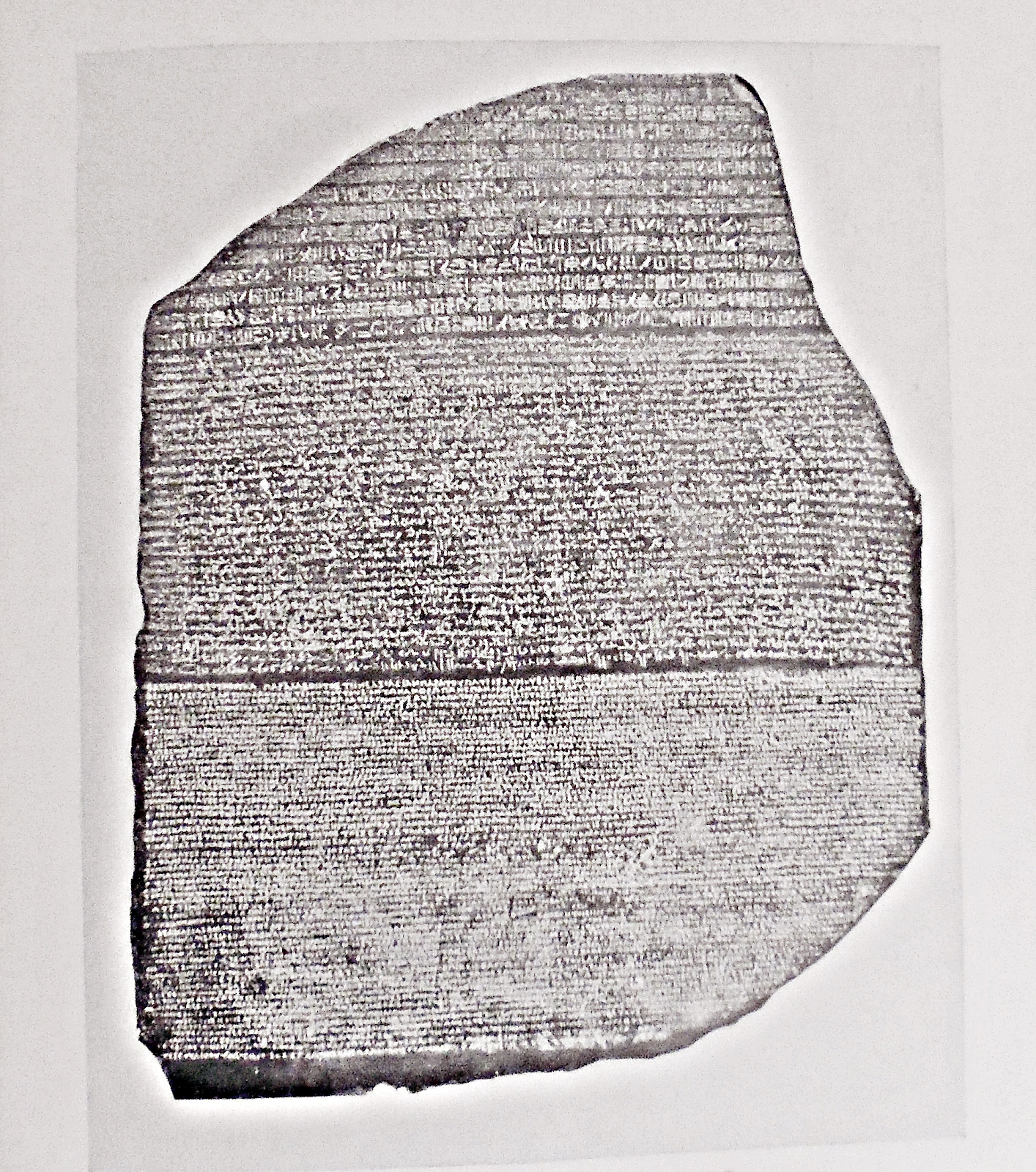
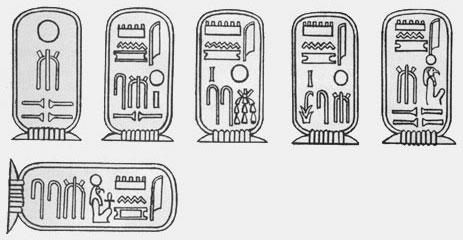
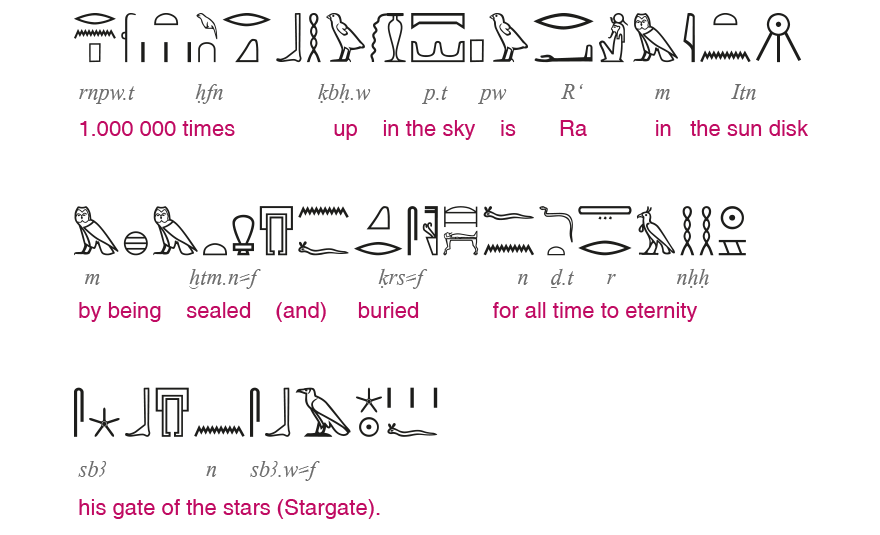


 Anonymous


